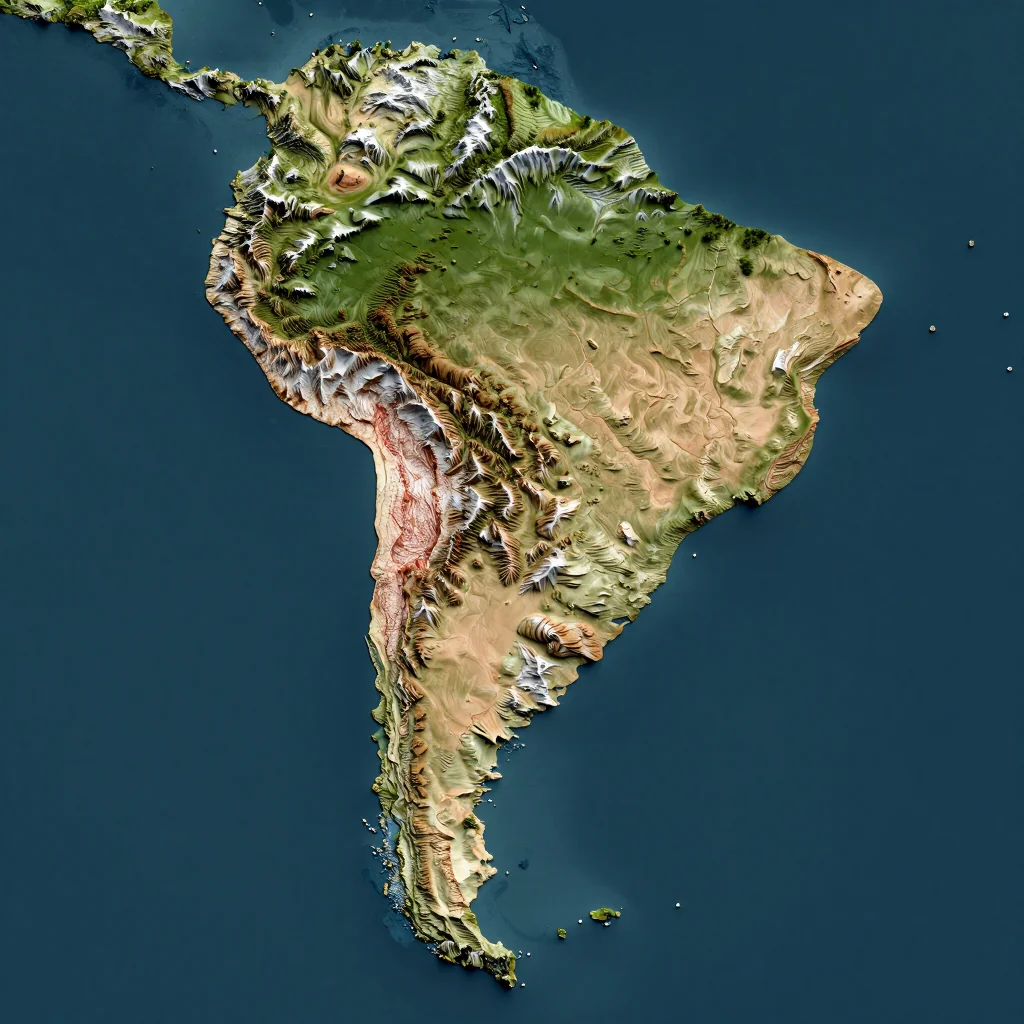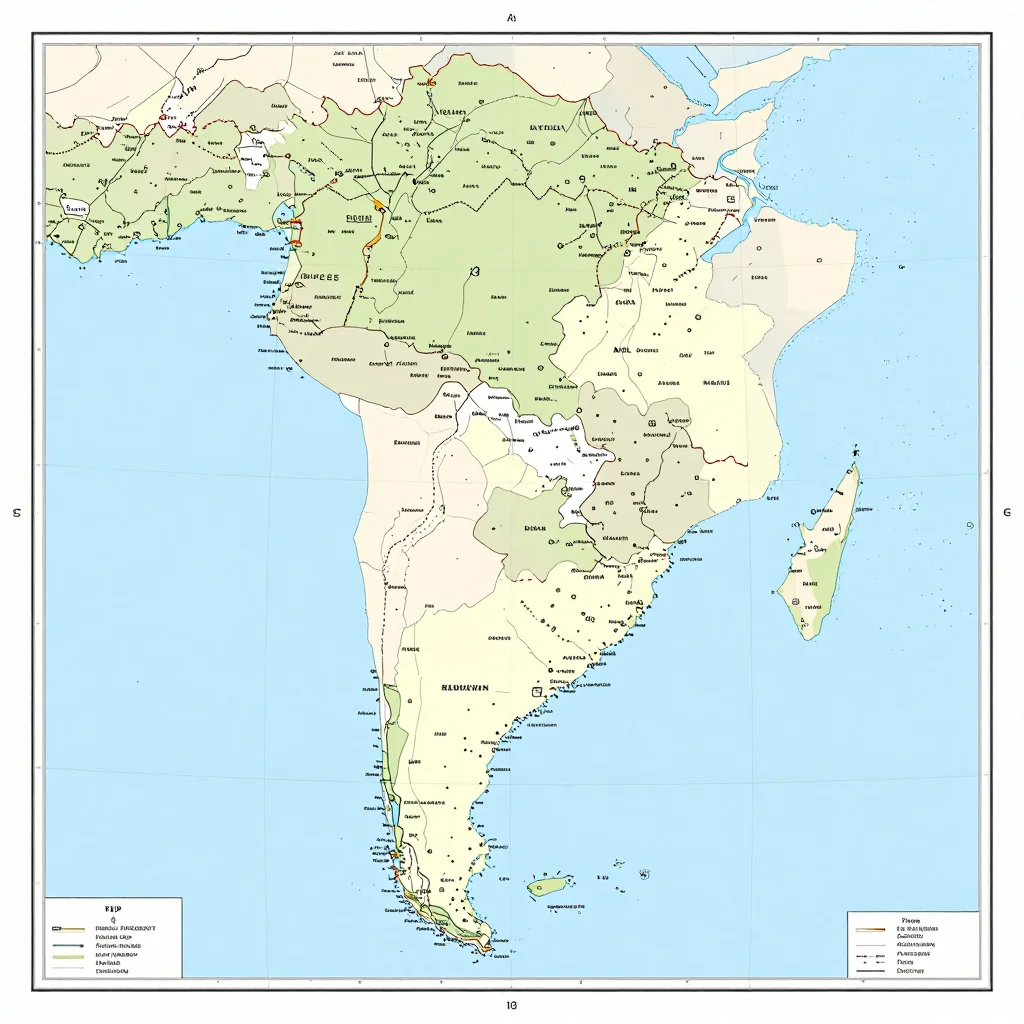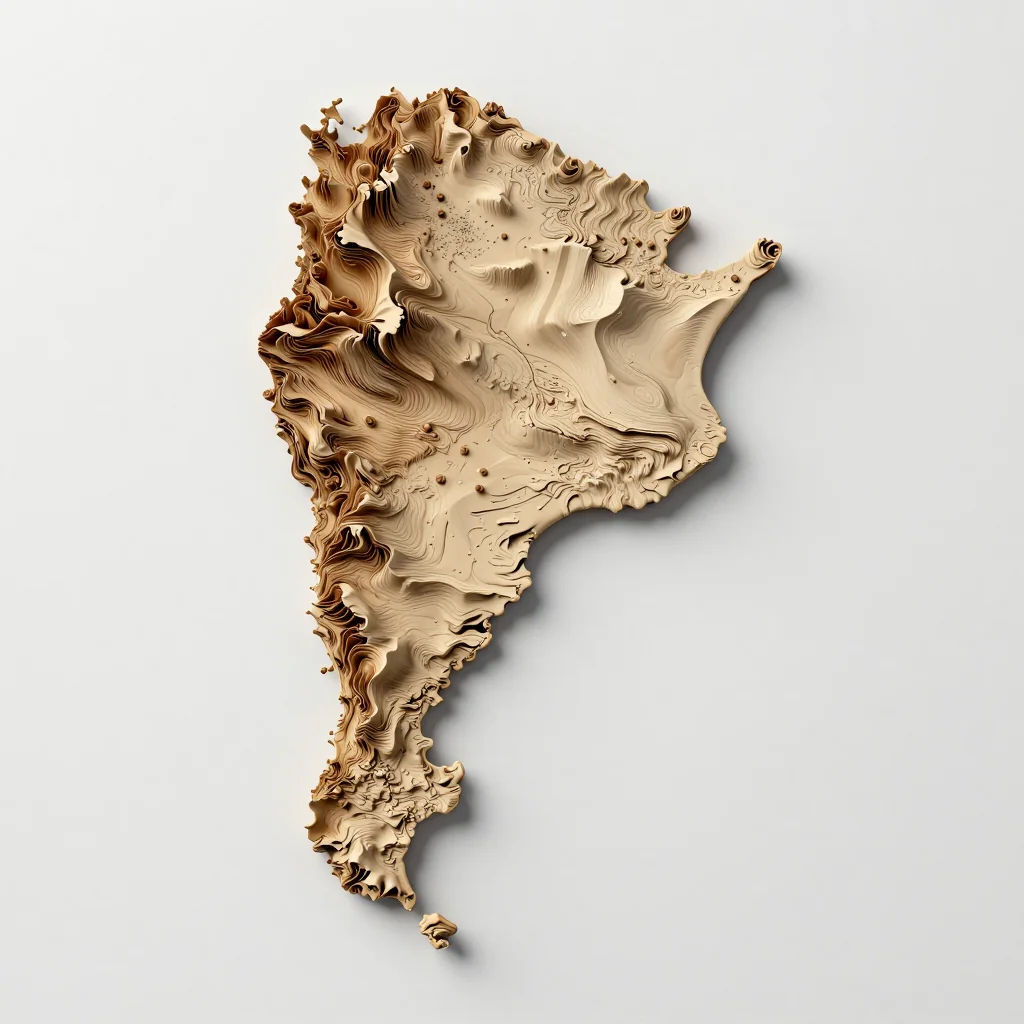
Argentina, the eighth-largest country in the world, spans a vast and varied landscape stretching from the subtropical north to the icy southern tip of South America. Its geographic diversity, from towering Andean peaks to expansive grasslands and windswept Patagonian steppes, makes it a natural wonderland. As a critical piece of the South American puzzle, Argentina’s geography influences its culture, economy, and global significance, captured vividly in maps and atlases that chart its sprawling regions.
**Geographic Location**
Argentina is located in the southern half of South America, bordered by the Andes Mountains to the west (shared with Chile), the Atlantic Ocean to the east, and neighboring countries including Bolivia, Paraguay, Brazil, and Uruguay to the north and northeast. Its coordinates lie approximately between 22°S and 55°S latitude and 55°W and 74°W longitude. Covering nearly 2.8 million square kilometers (1.1 million square miles), Argentina is the second-largest country in South America after Brazil and the 44th country by population density. This strategic position connects it to major trade routes and natural resources.
**Topography And Terrain**
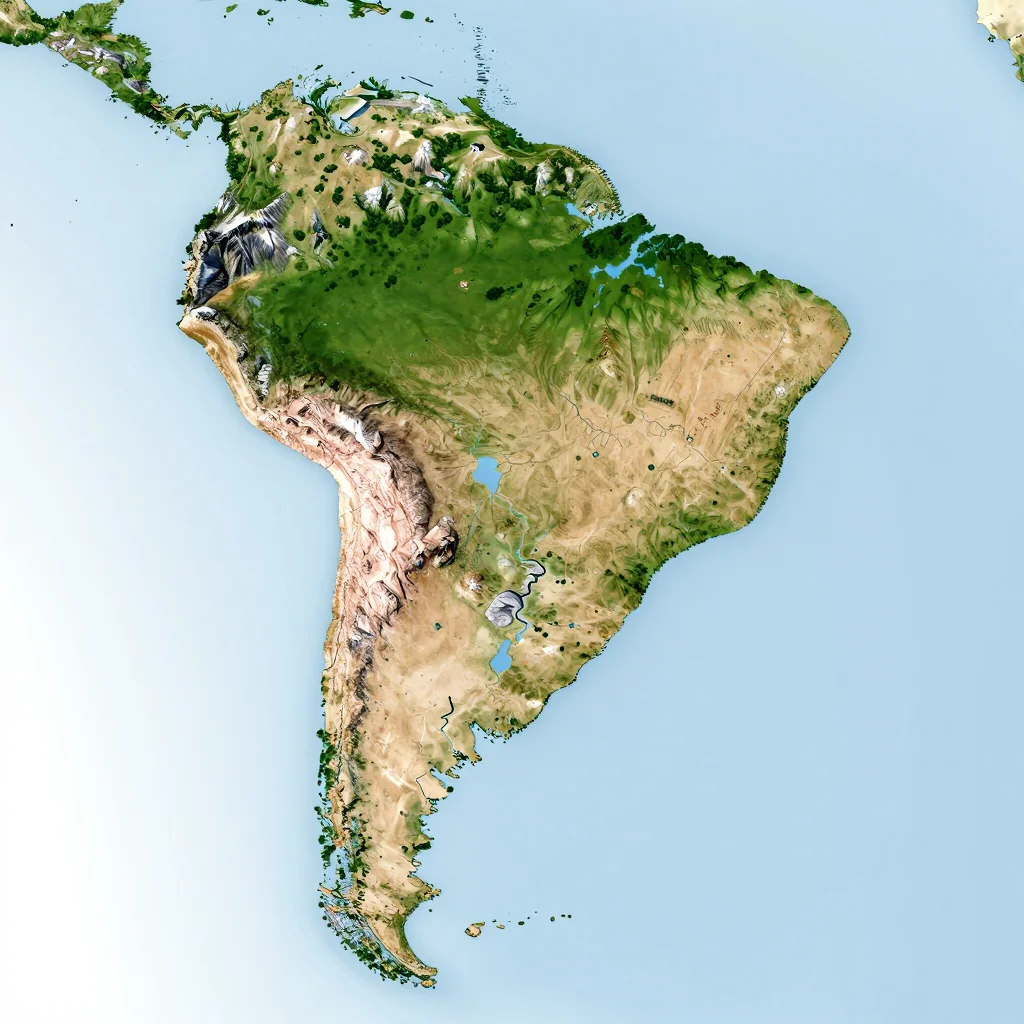
Argentina’s terrain is divided into three primary regions. The western Andean region features the rugged peaks of the Andes, including Aconcagua, the highest mountain in the Americas at 6,962 meters (22,841 feet). To the east of the Andes lies the fertile Pampas, a vast grassland plain known as the “breadbasket of Argentina,” spanning Buenos Aires, Córdoba, and Santa Fe provinces. South of the Pampas, Patagonia dominates with its arid plateaus, glaciers, and wind-swept plains, while the northern Gran Chaco and Mesopotamia regions consist of semi-arid lowlands and subtropical forests, respectively. Elevation varies dramatically, from sea level along the Atlantic coast to the high-altitude deserts of the Andean Puna.
**Climate And Weather**
Argentina’s climate zones reflect its immense latitudinal stretch. The north, including the Gran Chaco and Mesopotamia, has a hot, humid subtropical climate with seasonal monsoons. Central regions like the Pampas experience a temperate climate with distinct seasons, while Patagonia boasts cool, dry conditions due to its southern latitude and proximity to the Antarctic. The Andes influence rainfall patterns, creating rain shadows in the west and lush valleys in sheltered areas. Summers (December–February) are warm to hot, while winters (June–August) can be harsh in southern regions. The southern tip, near Tierra del Fuego, experiences subpolar conditions.
**Major Cities And Regions**
Argentina is divided into 23 provinces and the autonomous city of Buenos Aires, each with unique characteristics. **Buenos Aires**, the capital, is a cultural and economic powerhouse known for its European architecture and tango heritage. **Mendoza**, in the western Cuyo region, is famous for its vineyards and proximity to the Andes. **Córdoba**, the country’s second-largest city, blends colonial charm with a thriving university scene. **Rosario** and **Santa Fe** lie in the agricultural heartland of the Pampas, while **Salta** in the far north offers colonial beauty and Andean vistas. **Ushuaia** in Tierra del Fuego is the southernmost city, a gateway to Antarctica.
**Natural Landmarks**
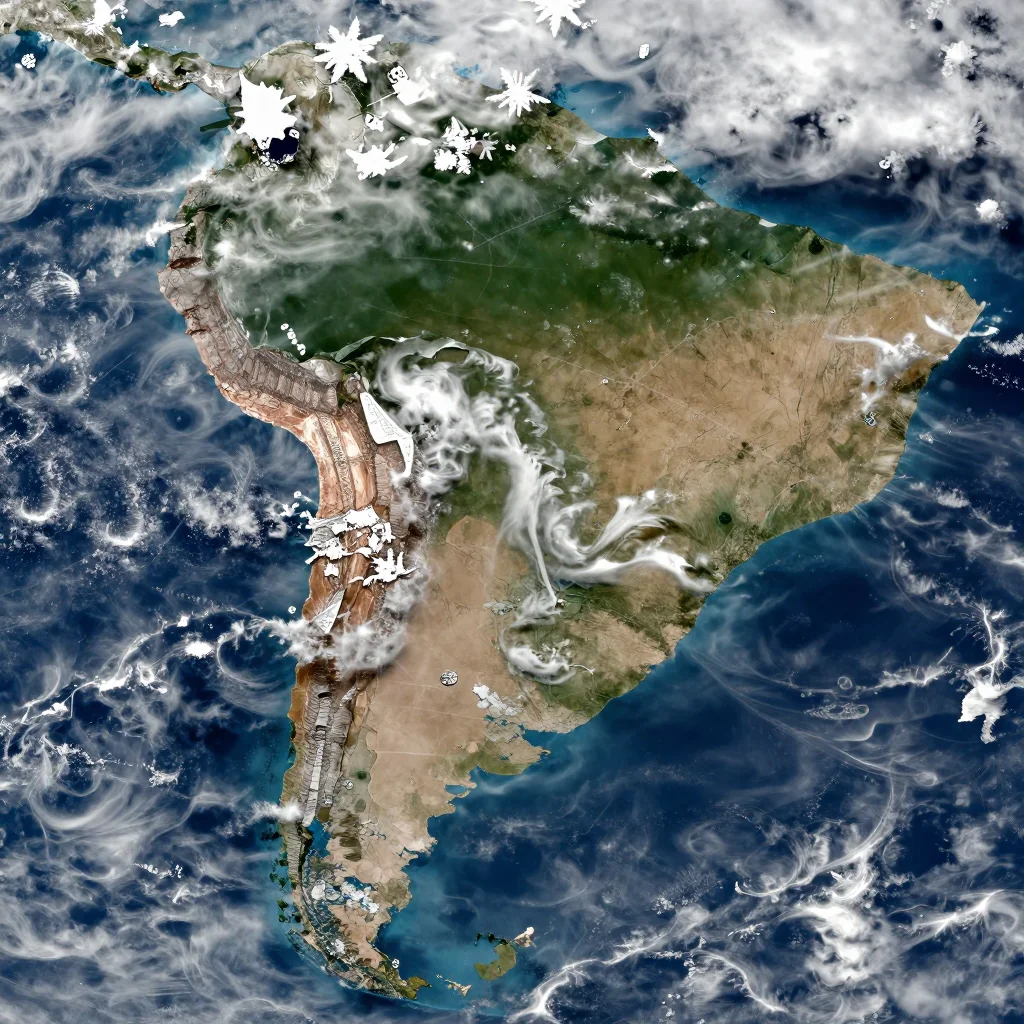
Argentina’s geography boasts iconic natural wonders. The **Iberá Wetlands** in Corrientes, a vast ecosystem of lagoons and forests, is the second-largest wetland in the world. **Aconcagua** dominates the Andes, while **Perito Moreno Glacier** in Los Glaciares National Park mesmerizes visitors with its advancing ice. **Nahuel Huapi National Park** in Patagonia features azure lakes and rugged peaks, and **Iguazú Falls**, shared with Brazil, cascades in a thunderous display of water over 275 falls. Rivers like the **Paraná** and **Colorado** carve through the landscape, while the **Río de la Plata** estuary serves as a vital waterway.
**Conclusion**
Argentina’s geographic diversity—from the peaks of the Andes to the wilds of Patagonia—reflects its status as a microcosm of South America’s natural and cultural richness. Its maps reveal a land of contrasts, where fertile plains, ancient glaciers, and vibrant cities coexist. This terrain shapes everything from agriculture to tourism, making Argentina a vital node in regional and global ecosystems. Whether explored through an atlas or experienced firsthand, Argentina’s geography is a testament to Earth’s boundless beauty and complexity. *Keywords: Argentina map, Argentina geography, Argentina atlas, Argentina terrain*