
Stretching over 2.78 million square kilometers (1.07 million square miles), Argentina is the eighth-largest country in the world and the second-largest in South America. Known for its dramatic landscapes—from soaring Andean peaks to windswept Patagonian plains—Argentina is a nation of contrasts. Home to Iguazú Falls, the world’s widest waterfall, and Ushuaia, the southernmost city on Earth, Argentina’s geographical diversity makes it a must-see destination. Dive into its geography, from its borders to its breathtaking natural landmarks.
Table of Contents
Map Gallery
Geographic Overview
Argentina’s Geography: A Land of Vast Landscapes and Natural Wonders
—
Geographic Location
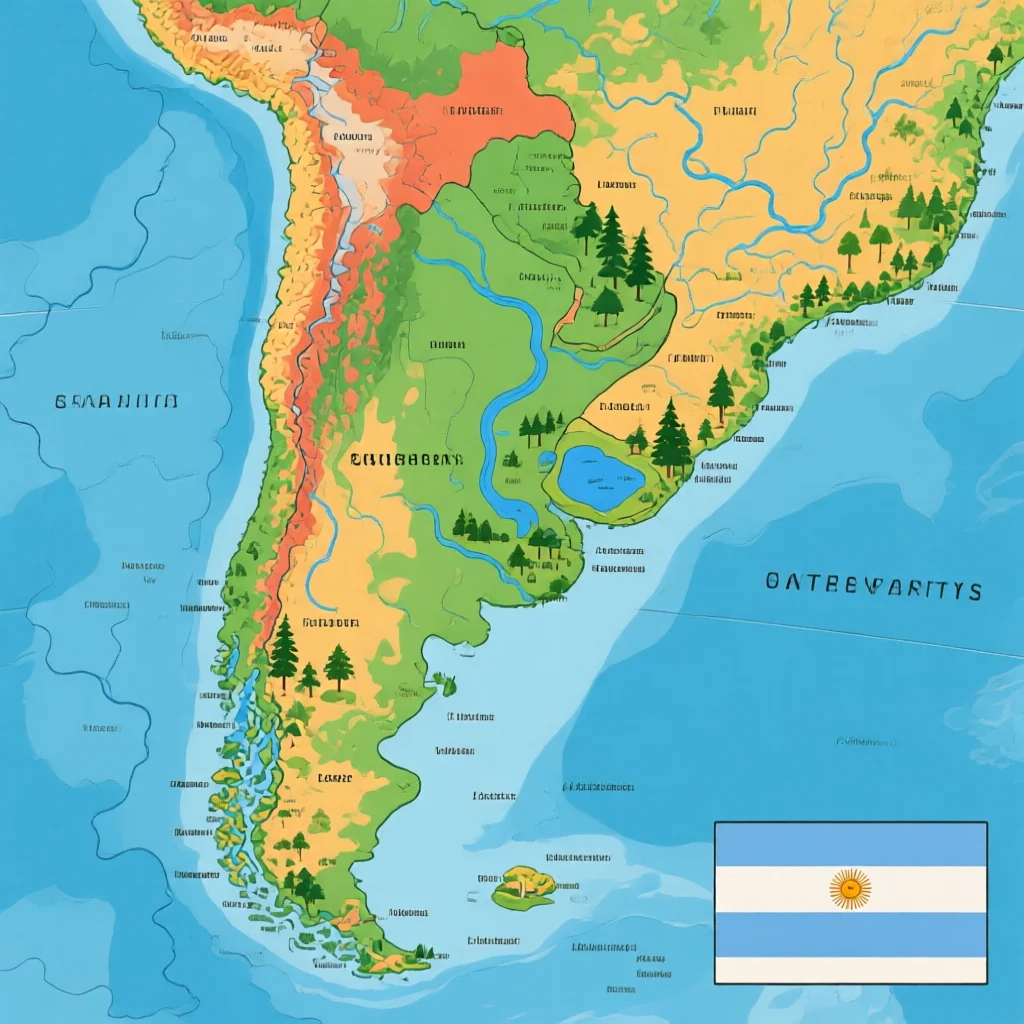
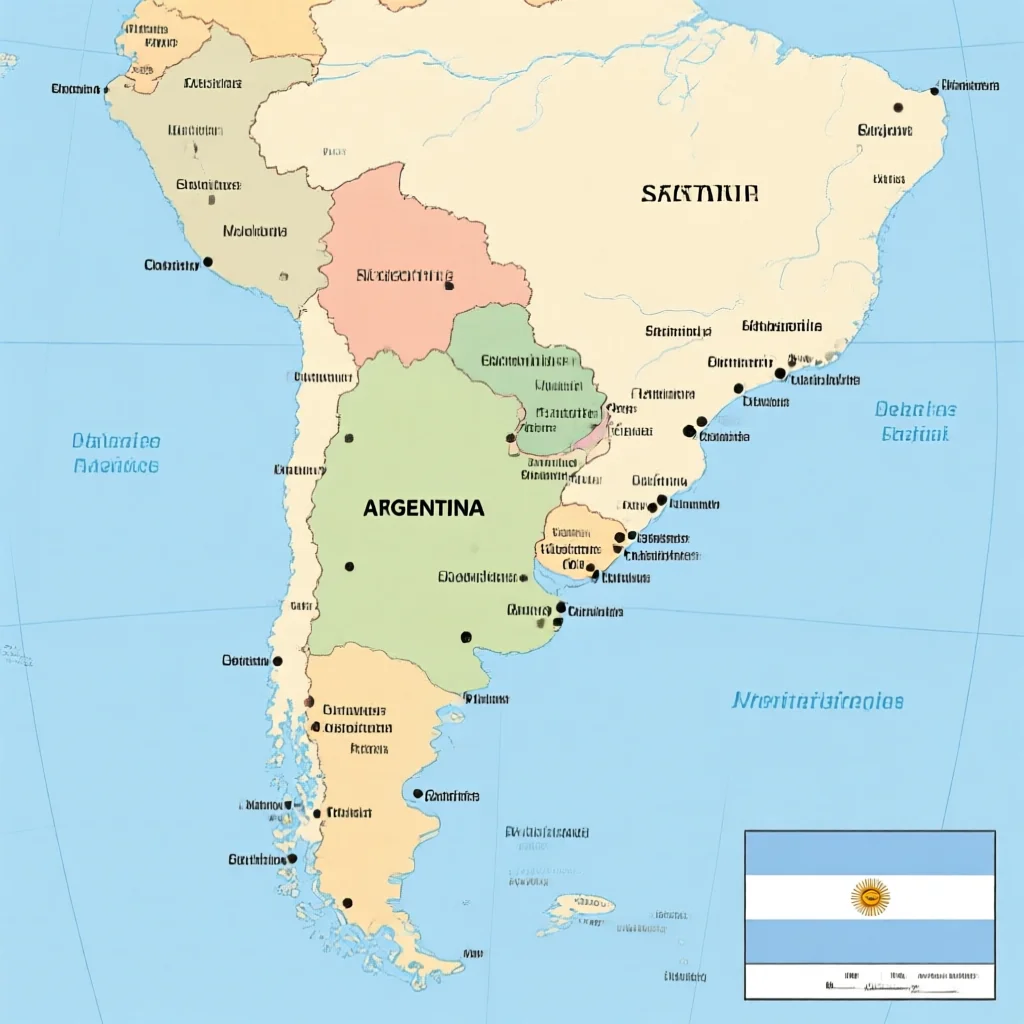
Argentina is located in the southern half of South America, bordered by Chile to the west, Bolivia and Paraguay to the north, Brazil and Uruguay to the northeast, and the Atlantic Ocean to the east. It spans latitudes from 22°S to 55°S, making it one of the world’s longest north-south countries. At 2,780,400 km² (1,073,500 mi²), it’s nearly four times the size of Texas. Its strategic position along the continent’s southeast coast contributes to its economic and cultural significance. —
Topography and Terrain
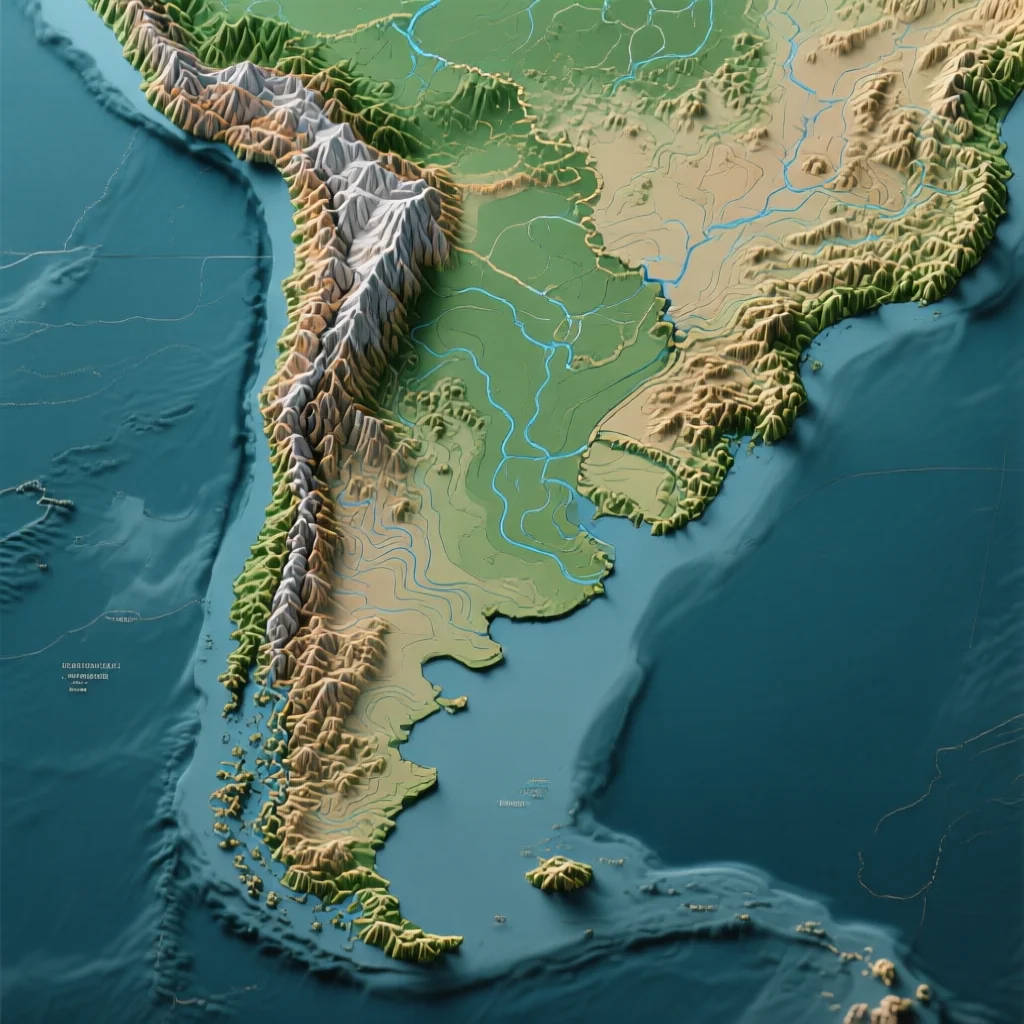
Argentina’s topography is remarkably varied. The Andes Mountains form a natural western border with Chile, featuring Aconcagua (6,961 meters/22,838 feet), the Western Hemisphere’s highest peak. East of the Andes lie the fertile Pampas grasslands, stretching across central Argentina and famous for cattle ranching and wheat production. The Gran Chaco region in the north consists of arid lowlands, while Patagonia dominates the south with plateaus, glaciers, and rugged coastlines. The Paraná and Uruguay Rivers converge to form the Río de la Plata estuary, a vital waterway. —
Climate and Weather
Argentina’s climate varies dramatically across its regions. The northern subtropical areas, like Salta, experience hot, humid summers and mild winters. The central Pampas has a temperate climate with four distinct seasons. In contrast, Patagonia’s subpolar climate brings harsh winds and cooler temperatures, while the arid Andean foothills of Mendoza enjoy a Mediterranean climate ideal for vineyards. Annual rainfall ranges from 1,000 mm (40 inches) in the northeast to just 100 mm (4 inches) in Patagonia. —
Major Cities and Regions
Buenos Aires, Argentina’s vibrant capital, is a cultural hub with European-inspired architecture and a thriving arts scene. The Pampas region supports Argentina’s agricultural heartland, producing beef and grains. Mendoza, known for its Malbec wines, sits in the western foothills of the Andes. The northern region of Salta offers colonial charm and the Quebrada de Humahuaca canyon. Patagonia’s cities, like Bariloche and Ushuaia, attract adventure seekers with skiing and trekking opportunities. The Iguazú Falls, shared with Brazil, is a top tourist attraction in the northeast. —
Natural Landmarks
Argentina’s natural wonders are legendary. Iguazú Falls, with its 275 waterfalls, is a UNESCO World Heritage Site. In Patagonia, the Perito Moreno Glacier in Los Glaciares National Park mesmerizes visitors with its constant movement. The Valdés Peninsula is a wildlife sanctuary for penguins and elephant seals. The Talampaya National Park in the desert shows ancient geological formations, while the Nahuel Huapi National Park in the Lake District offers stunning alpine scenery. —
Conclusion
Argentina’s geography, captured in detailed **Argentina maps** and **Argentina atlases**, reveals a land of extremes—from the towering Andes to the endless Pampas. Its **topographic map** highlights diverse ecosystems, from rainforests to arid deserts. Whether exploring the energy of Buenos Aires, trekking in Patagonia, or marveling at Iguazú’s cascades, Argentina’s landscapes invite adventure. With such rich natural and cultural diversity, Argentina truly embodies the essence of South America’s geographic marvels. *Keywords: Argentina map, Argentina geography, Argentina atlas, Argentina topographic map*
Conclusion
Argentina offers a diverse geographical landscape worth exploring. From its natural wonders to urban centers, there is much to discover.