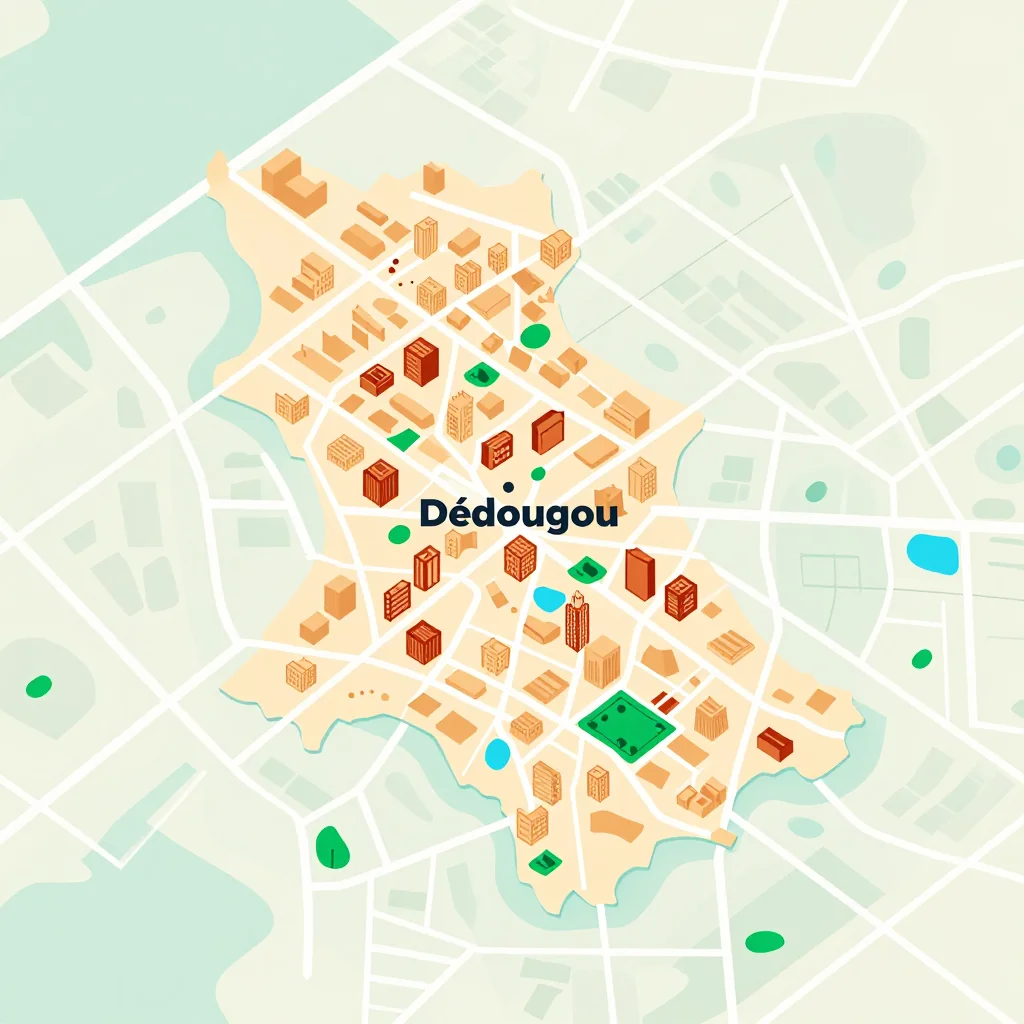
Explore the comprehensive Dédougou map to discover the city’s natural beauty, urban layout, and historical significance. Learn about key districts, landmarks, and tourist attractions in Burkina Faso.
📋 Table of Contents
- **Physical Geography Map of Dédougou**
- **Satellite View of Dédougou from Space**
- **Topographic Relief Map of Dédougou**
- **Political Map of Dédougou – Administrative Boundaries**
- **Street Map of Dédougou – Road Network**
- **Historical Vintage Map of Dédougou**
- **3D Isometric Topographic Map of Dédougou**
- **Futuristic Cyberpunk Map of Dédougou**
- **Isometric Tourist Map of Dédougou – Attractions**
2. INTRODUCTION
Nestled in the heart of Burkina Faso, Dédougou is a vibrant city that blends the charm of traditional African culture with modern urban development. Whether you're a seasoned traveler or a first-time visitor, a Dédougou map is an essential tool for navigating this dynamic city. In this guide, we will delve into the various aspects of Dédougou, from its physical geography to its tourist attractions, providing you with a detailed overview of what makes this city unique. By the end, you'll have a clear understanding of Dédougou's urban layout, key neighborhoods, and must-see landmarks.
Physical Geography Map of Dédougou
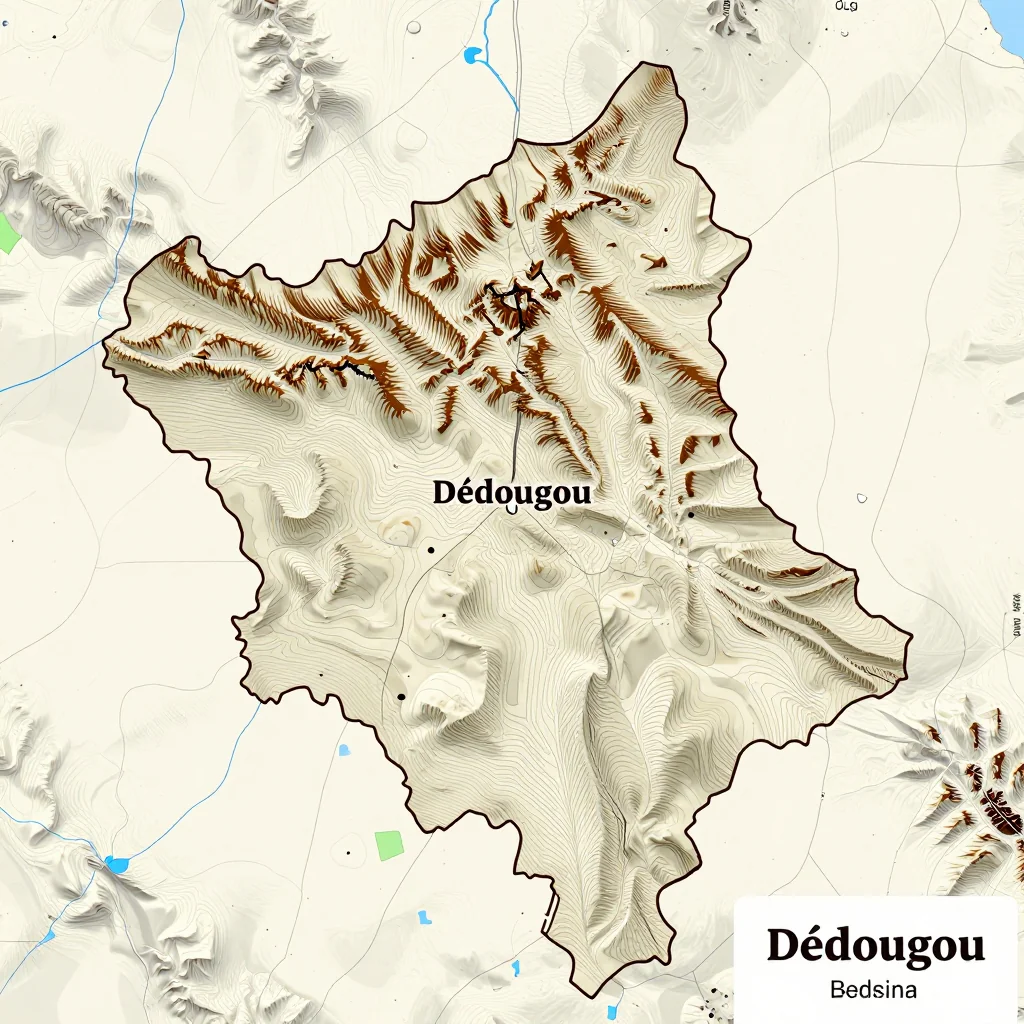
Dédougou is situated in the western part of Burkina Faso, within the Mouhoun Province. The city's geography is characterized by a relatively flat terrain, with a few gentle hills and valleys. The natural features of Dédougou include the Mouhoun River, which flows nearby, providing a vital water source for the city and its surrounding areas. The river's presence has shaped the city's development, influencing the location of agricultural lands and residential areas. Additionally, the city is surrounded by lush savannas and semi-arid landscapes, which are home to a variety of flora and fauna. Understanding the city's natural setting is crucial for visitors and residents alike, as it offers insights into the local environment and the city's strategic placement within the region.
Satellite View of Dédougou from Space
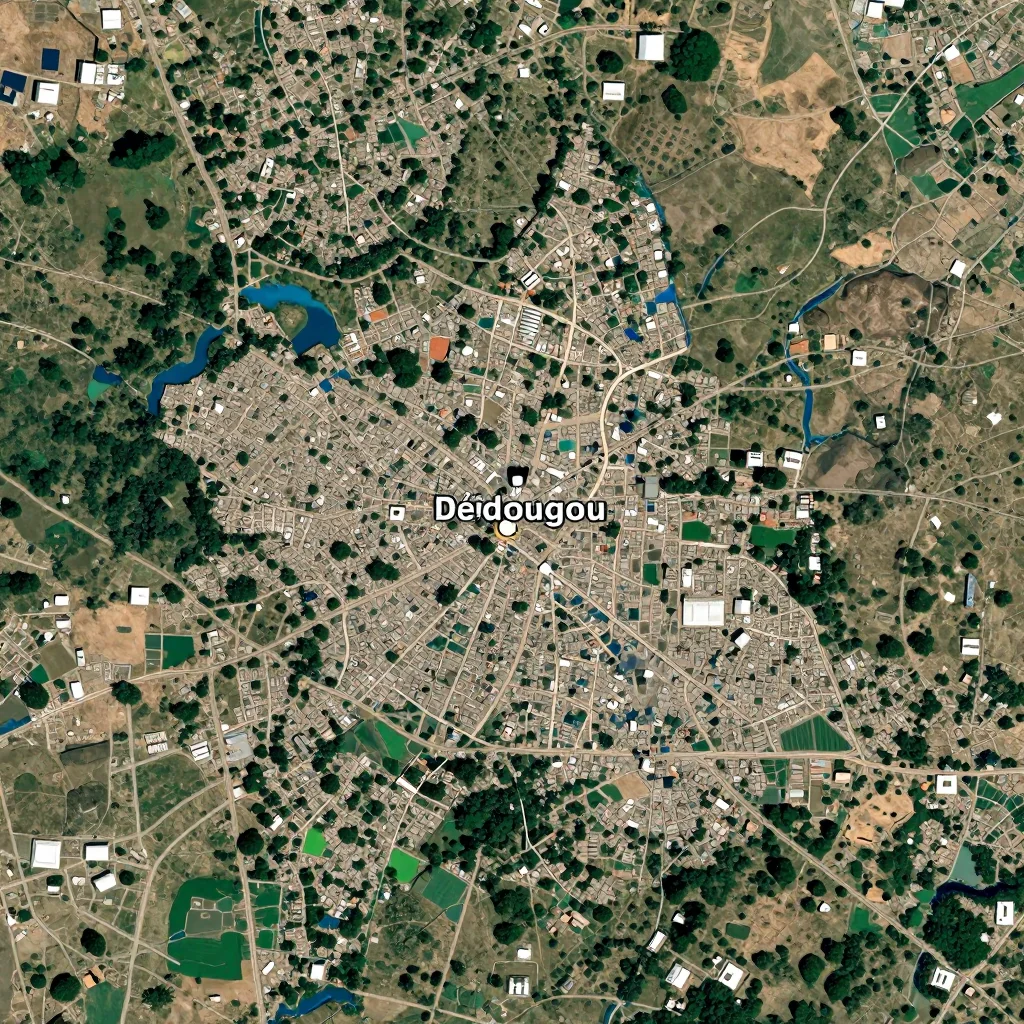
From a satellite view, Dédougou appears as a well-organized urban area with a distinct city layout. The city center is easily identifiable, marked by a dense concentration of buildings and roads. The urban sprawl radiates outward, with residential neighborhoods and commercial zones extending in a structured manner. The surrounding savannas and agricultural lands are visible, showcasing the city's harmonious coexistence with nature. The Mouhoun River, a significant natural feature, can be seen meandering through the landscape, adding a picturesque element to the city. This satellite view provides a bird's-eye perspective that helps visitors and planners understand the spatial distribution of Dédougou's urban and natural elements.
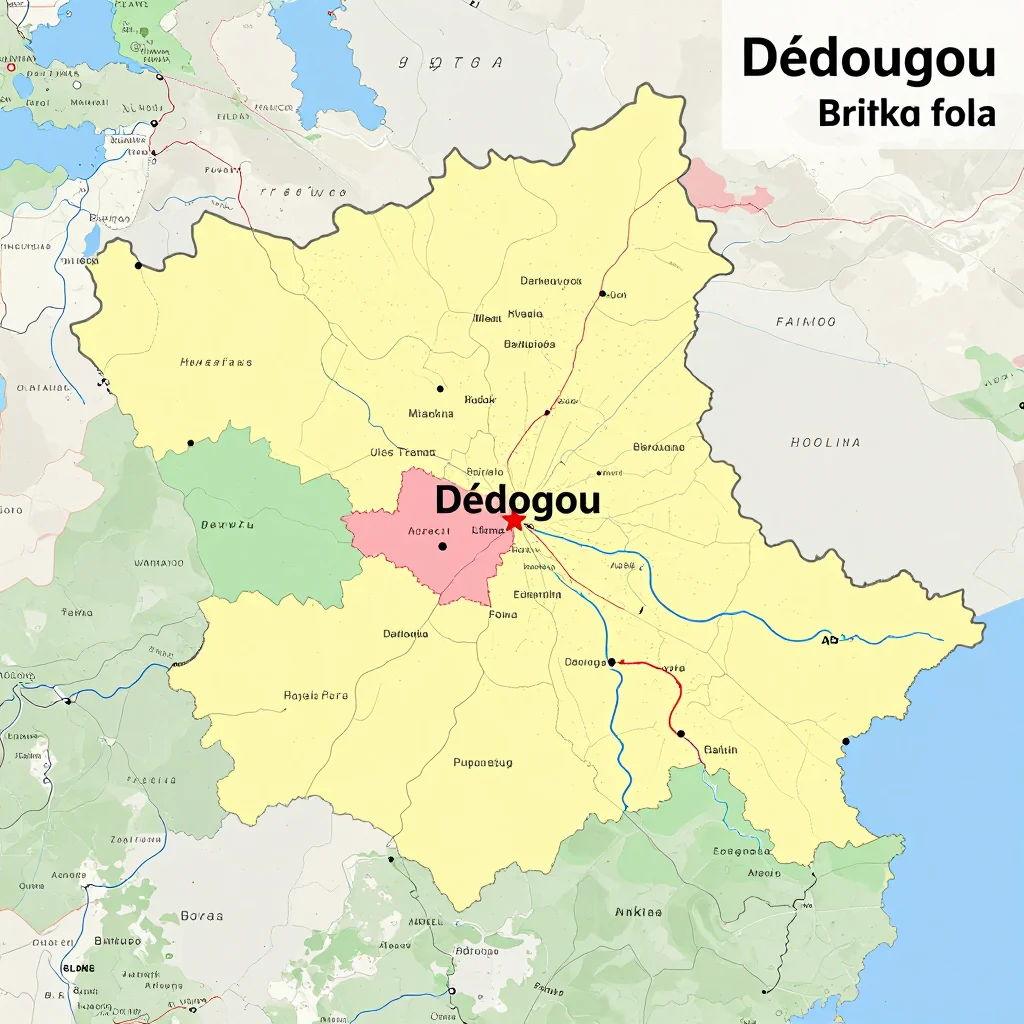
Topographic Relief Map of Dédougou
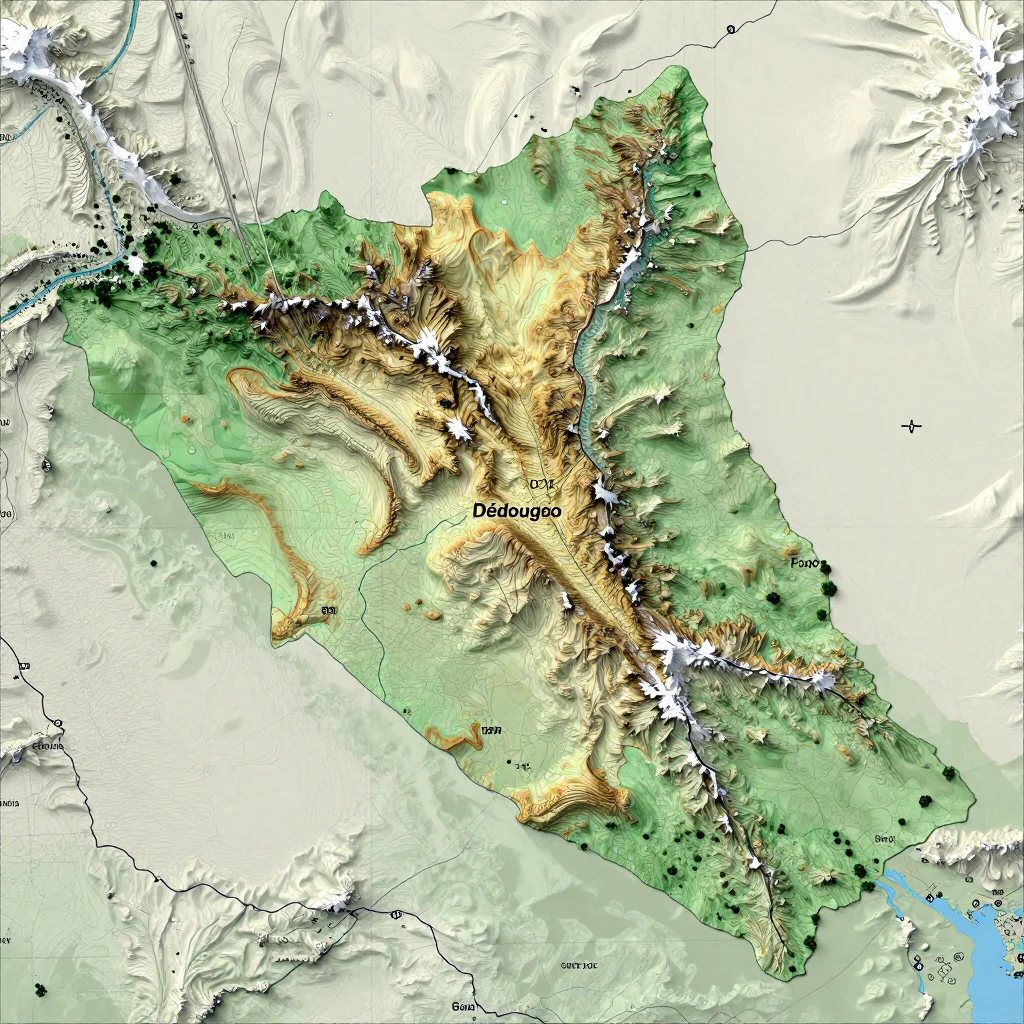
The topographic relief map of Dédougou offers a detailed view of the city's elevation and terrain. While the city itself is relatively flat, there are subtle variations in height that create a gentle undulating landscape. The highest points in the city are a series of small hills located on the outskirts, which provide panoramic views of the surrounding area. The valleys, often marked by the presence of streams and smaller water bodies, are important for local agriculture and water management. The topography of Dédougou plays a significant role in the city's urban planning, influencing the placement of infrastructure and the development of residential and commercial areas.
Political Map of Dédougou – Administrative Boundaries
Dédougou is divided into several administrative districts, each with its own unique characteristics and functions. The city is the capital of the Dédougou Department and is part of the larger Mouhoun Province. The political map clearly delineates these boundaries, helping residents and visitors understand the city's governance structure. Key districts include the city center, which houses the administrative offices and major commercial areas, and the peripheral neighborhoods, which are primarily residential. The city also has several boroughs, each with its own mayor and local council, contributing to the efficient management of urban services and development.
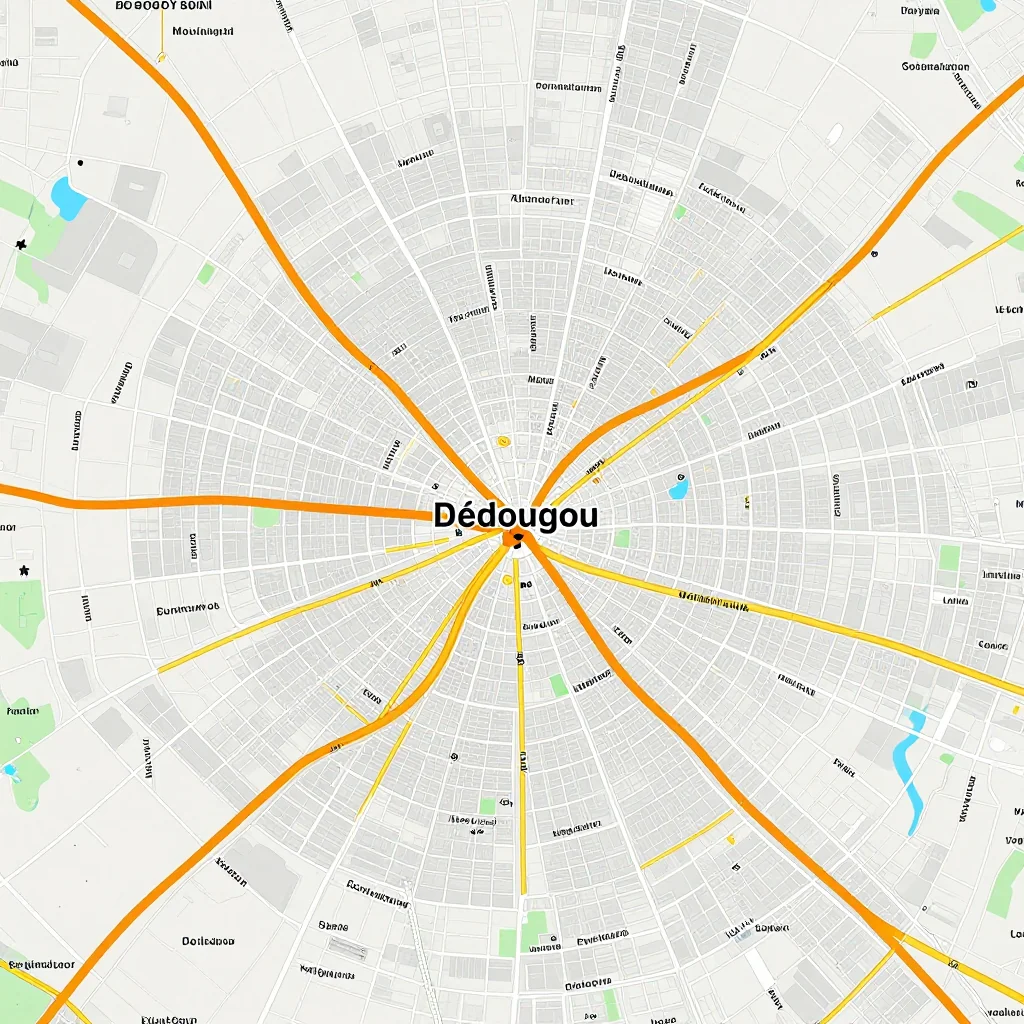
Street Map of Dédougou – Road Network
The street map of Dédougou provides a comprehensive overview of the city's road network, which is essential for navigating the urban environment. The city center is the hub of activity, with a well-organized grid of streets that connect major landmarks and points of interest. The main roads, such as the N-11 highway, are wide and well-maintained, facilitating easy travel to and from neighboring towns and cities. The street network in Dédougou is designed to balance the needs of residents, businesses, and tourists, ensuring that all parts of the city are accessible and connected. Whether you're driving, walking, or using public transportation, the street map is a valuable resource for exploring the city's diverse neighborhoods and attractions.
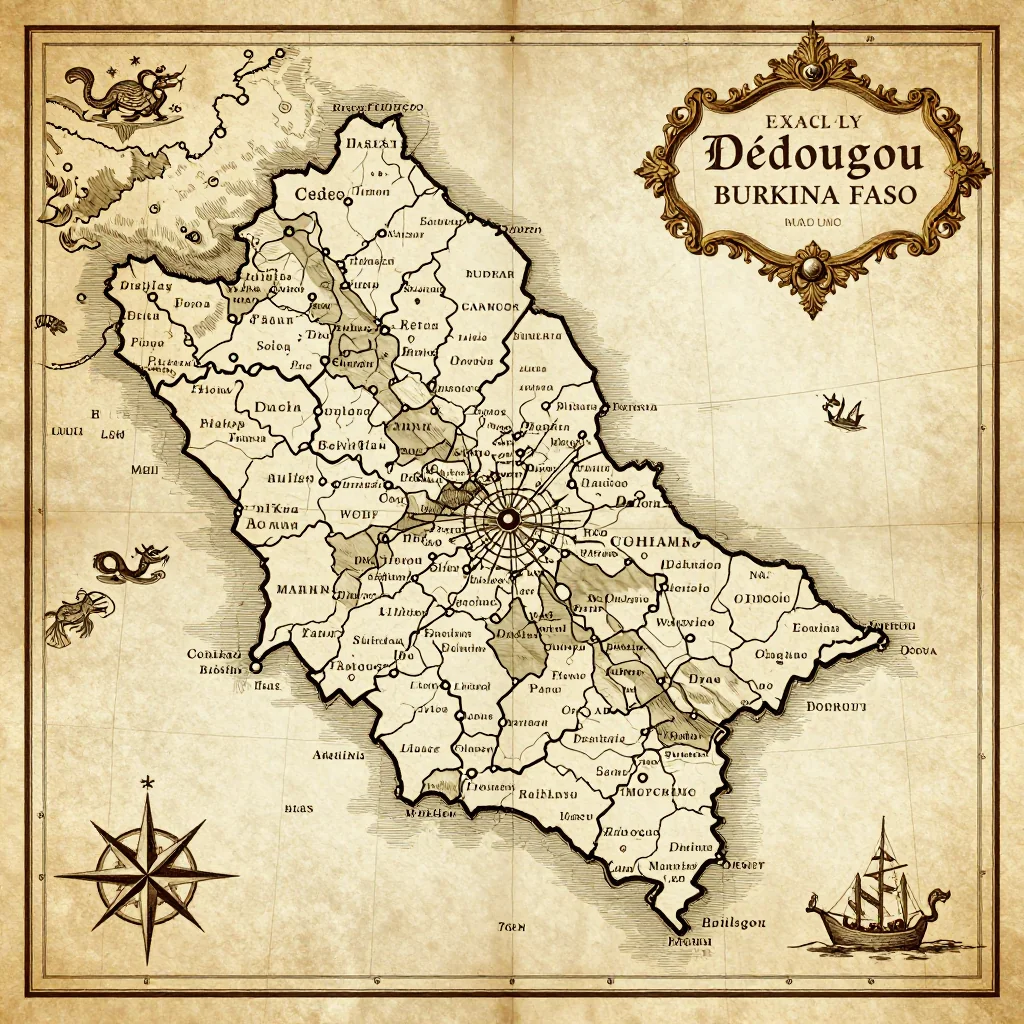
Historical Vintage Map of Dédougou
The historical vintage map of Dédougou offers a fascinating glimpse into the city's past. Mapped in the early 20th century, this map captures the original layout of the city, including its early districts and key landmarks. The city's history is deeply rooted in its traditional African heritage, and the vintage map highlights the importance of community and cultural centers. Over the years, Dédougou has undergone significant development, but the historical map serves as a reminder of its origins and the strategic planning that has shaped its modern form. For history enthusiasts and those interested in the city's evolution, the vintage map is an indispensable tool.

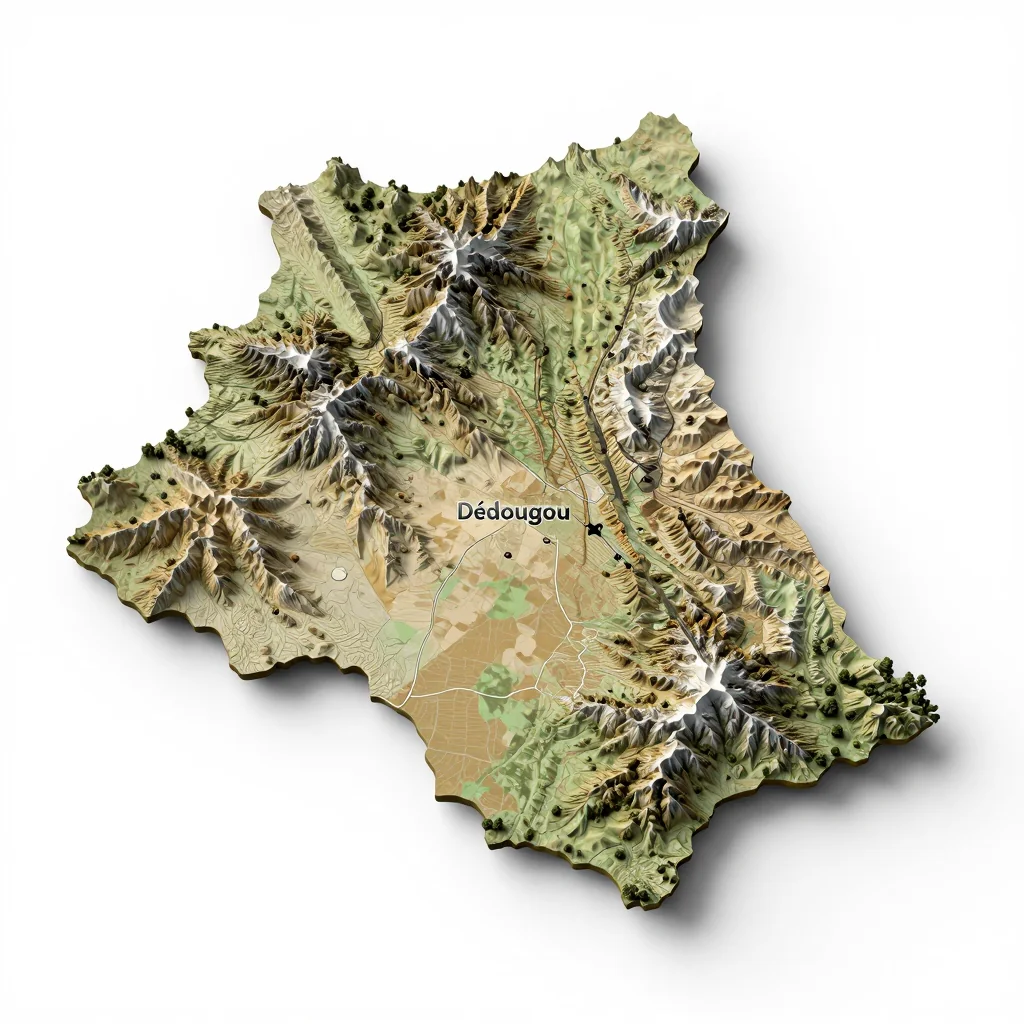
3D Isometric Topographic Map of Dédougou
The 3D isometric topographic map of Dédougou brings the city to life in a visually engaging way. This map provides a detailed and realistic visualization of the city's elevation, terrain, and urban features. The city center, with its dense cluster of buildings, is depicted in high resolution, while the surrounding areas, including the hills and valleys, are shown with accurate contour lines. The 3D map is particularly useful for understanding the spatial relationships between different parts of the city, making it easier to plan routes and explore the urban landscape. It's a modern and dynamic representation that complements traditional 2D maps.