
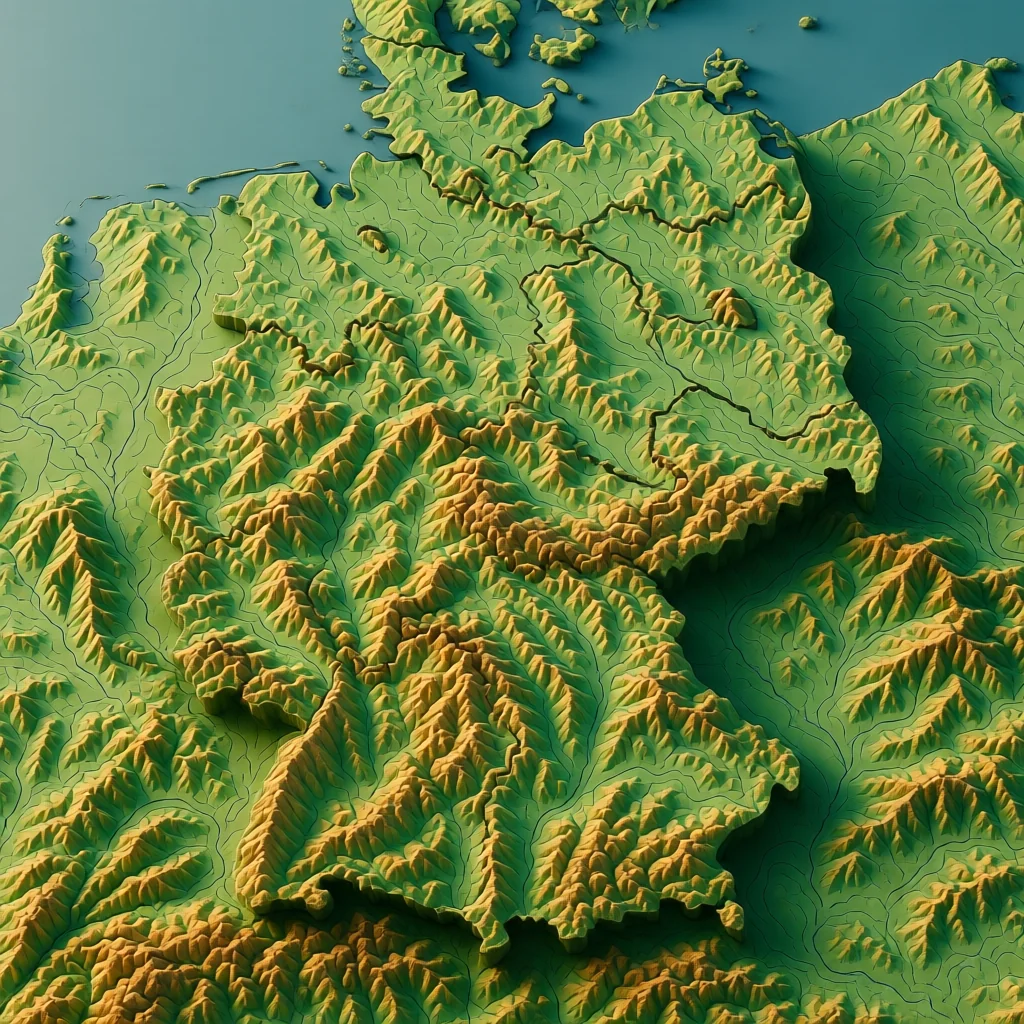
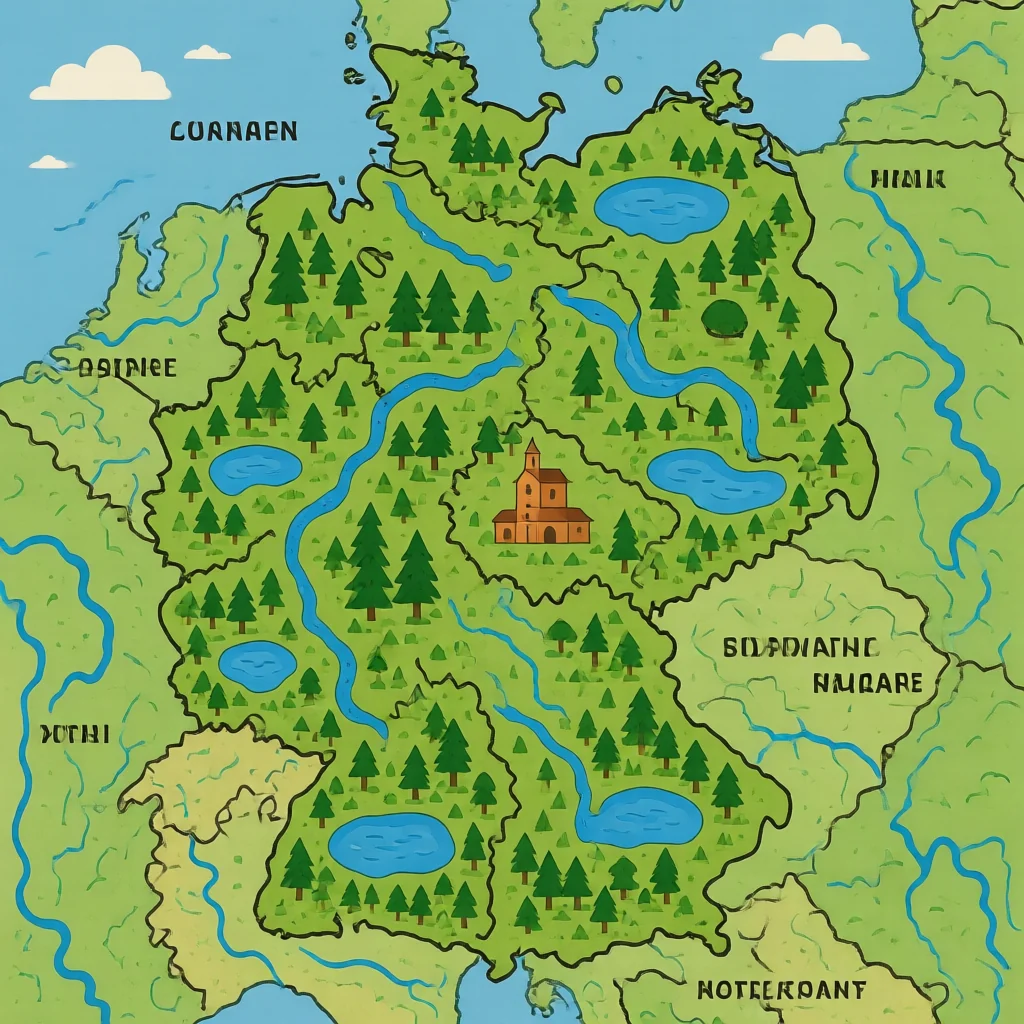
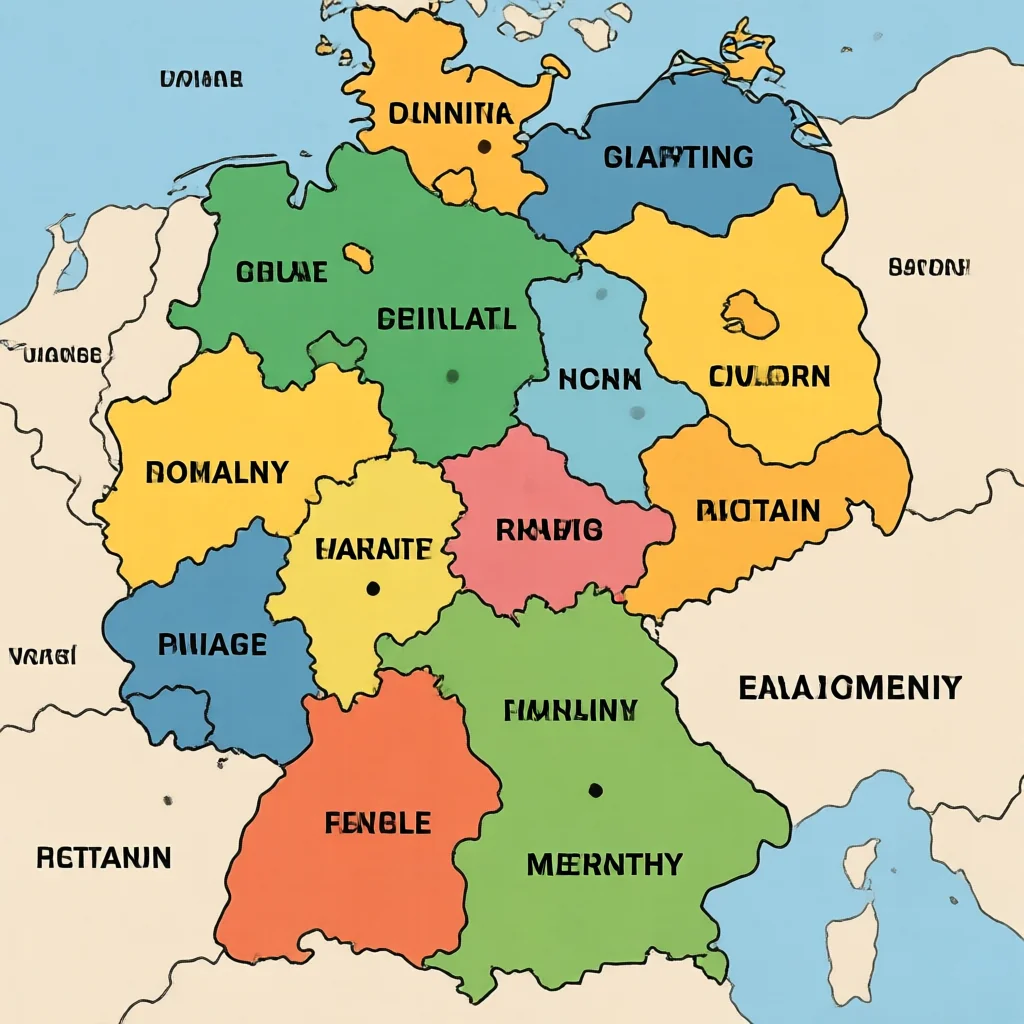
Germany, located in the heart of Europe, is a country of striking geographic diversity, bridging the North Sea and Baltic coasts in the north with the rugged peaks of the Alps in the south. A Germany map or atlas reveals a nation shaped by rivers, mountains, and cultural hubs, offering a blend of urban dynamism and natural beauty. This article explores Germany’s geographic location, topography, climate, major cities, and iconic landmarks, underscoring why its geography remains a focal point for exploration.
Map Gallery
Geographic Location
Germany is centrally positioned in Europe, bordering nine countries: Denmark to the north, Poland and the Czech Republic to the east, Austria and Switzerland to the south, France, Luxembourg, Belgium, and the Netherlands to the west. Its northern coastline stretches along the North Sea and Baltic Sea, while its southern boundary reaches into the alpine regions near Austria. This strategic location has historically made Germany a crossroads for trade and culture, with major rivers like the Rhine and Danube facilitating connectivity.
Topography: A Tapestry of Landscapes
Germany’s topography varies dramatically from north to south. The **North German Plain**, a low-lying region in the north, features flatlands, marshes, and coastal dunes. This area includes the Rhine-Weser Triangle and the Elbe River valley, vital for agriculture and shipping. Moving southward, the **Central Uplands** rise gradually, characterized by rolling hills, forests, and plateaus such as the Harz Mountains and the **Black Forest** (Schwarzwald), a dense woodland known for its scenic beauty and hiking trails. The southern **Alpine Foreland** transitions into the **Bavarian Alps**, which form Germany’s highest terrain. Here, the **Zugspitze** (2,962 meters/9,718 feet), Germany’s tallest peak, dominates the landscape. Major rivers like the Rhine, Danube, and Elbe carve through valleys, shaping fertile regions and defining regional identities. The **Rhine Gorge**, a UNESCO World Heritage Site, exemplifies this interplay of geology and history.
Climate: Regional Variations
Germany’s climate is generally temperate but varies significantly due to its topography. The north and west experience a **maritime climate** influenced by the Atlantic Ocean, with mild winters, cool summers, and consistent rainfall. In contrast, eastern and central regions have a **continental climate**, featuring colder winters and hotter summers. The south, particularly the Alps, receives higher rainfall and snowfall, creating alpine microclimates. Seasonal changes are distinct nationwide, with autumns marked by vibrant foliage and winters bringing snow to mountainous areas.
Major Cities: Cultural and Economic Hubs
Germany’s major cities reflect its geographic diversity and historical significance: – **Berlin**: The capital, located in the north-central region, is a political and cultural center, situated on the Spree River. – **Munich** (München): In the Bavarian Alps, this city blends modernity with traditional Bavarian culture. – **Hamburg**: A bustling port city in the north, straddling the Elbe River, it serves as a key North Sea gateway. – **Frankfurt am Main**: A financial powerhouse in the Rhine-Main region, renowned for its skyscrapers and trade fairs. – **Cologne** (Köln): In the west, this ancient city lies on the Rhine and is famous for its Gothic cathedral.
Natural Landmarks: Treasures of the German Landscape
Germany’s natural landmarks draw millions of visitors annually. The **Black Forest** offers dense pine forests and tranquil valleys, while the **Bavarian Alps** provide skiing and hiking opportunities. The **Rhine Gorge**, with its vineyards and medieval castles, exemplifies Germany’s scenic beauty. Coastal regions like the **Wadden Sea** (shared with Denmark and the Netherlands) are UNESCO-protected wetlands. The **Moselle Valley**, known for its wine production, and the **Harz Mountains**, with their historic silver mines, add further diversity. National parks such as **Bayerischer Wald** (Bavarian Forest) and **Jasmund** on Rügen Island preserve unspoiled ecosystems.
Conclusion
Germany’s geography, as depicted in maps and atlases, tells a story of contrasting landscapes—from the flat northern plains to the dramatic alpine south. This diversity influences its climate, economy, and culture, with cities and natural landmarks serving as testament to its rich heritage. Whether exploring the Rhine’s scenic bends or the Black Forest’s trails, Germany’s geography invites both discovery and reflection. For travelers and scholars alike, a Germany map is not just a guide but a window into the soul of this multifaceted nation. *(Word count: 600)*