
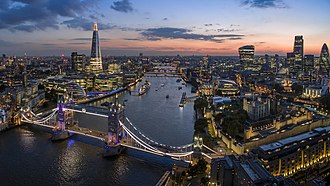
Figure: London location map
# London City Guide – Complete Maps and Geographic Atlas 2026
When you consult a **London map**, you’re looking at the vibrant heart of the United Kingdom—a global metropolis where ancient history collides with cutting-edge culture. London is the capital and largest city of both England and the UK, with a population of 9.1 million residents as of 2024. Its wider metropolitan area is the largest in Western Europe, home to 15.1 million people. This **London guide** will navigate you through its remarkable **London geography**, essential **London travel** information, and the unmissable sights that make millions **visit London** each year. Situated on the River Thames in southeast England, London has been a major settlement for nearly 2,000 years, evolving from a Roman outpost to a world-leading financial and cultural capital.
## Detailed Geographic Location & Landscape
London’s **geography** is defined by the River Thames, which slices through the city from west to east. The city sits at the head of a 50-mile (80 km) tidal estuary that opens into the North Sea. Its ancient core, the **City of London**, was founded by the Romans as *Londinium* around 50 AD and still retains its medieval boundaries. To its west lies the **City of Westminster**, the historic seat of government and monarchy.
The modern administrative area, **Greater London**, was established in 1965 and encompasses 32 London boroughs plus the City of London, governed by the Greater London Authority. This sprawl historically crossed the counties of Middlesex, Essex, Surrey, Kent, and Hertfordshire. The terrain is generally flat, with gentle hills in the north (e.g., Hampstead Heath) and south. Key geographic zones include:
* **The Thames Valley:** The linear corridor along the river, hosting most major landmarks.
* **The London Basin:** The low-lying clay landscape surrounding the valley.
* **Metropolitan Green Belt:** Protected green space encircling the urban area, limiting sprawl.
Understanding this layout on a **London map** is crucial for navigating its diverse neighborhoods, from the financial skyscrapers of the City to the village-like feels of areas like Richmond or Dulwich.
## Climate: What to Expect Year-Round
London experiences a **temperate maritime climate**, characterized by mild temperatures, frequent cloud cover, and rainfall distributed throughout the year. Expect cool winters (average highs 8°C/46°F) and mild summers (average highs 23°C/73°F). Snow is rare but possible. Rainfall averages about 600mm annually, with light drizzle common. The city can occasionally experience heatwaves (temperatures exceeding 30°C/86°F) or, rarely, cold snaps. The best **London travel** months are late spring (May-June) and early autumn (September-October) for pleasant weather and fewer crowds. Always carry a light jacket or umbrella—it’s famously unpredictable.
## Economy & Tourism: The Engines of London
London is one of the world’s most powerful economic hubs. Its economy is dominated by:
* **Financial Services:** The City of London and Canary Wharf form a leading global financial center.
* **Professional & Business Services:** Law, consulting, and tech are massive sectors.
* **Creative Industries:** Fashion, media, film, and advertising thrive here.
* **Tourism:** A cornerstone of the **London** economy, attracting over 20 million international visitors annually pre-pandemic. Key draws are heritage sites, museums, shopping, and West End theatre.
This economic diversity fuels its status as a must-**visit London** destination, offering everything from high-finance to world-class arts.
## Transportation: Navigating the Metropolis
The **London travel** network is extensive and integral to the city’s function. Key components include:
* **The London Underground (“The Tube”):** The oldest underground railway system in the world, with 11 lines and 272 stations. An Oyster card or contactless bank card is the most cost-effective way to pay.
* **Buses:** Red double-deckers cover all areas, offering scenic above-ground travel.
* **National Rail Services:** Connects London to the rest of the UK, with major termini like King’s Cross, Paddington, and Victoria.
* **Cycling & Walking:** The Santander Cycles bike-sharing scheme and extensive footpaths make active travel viable.
* **Airports:** Heathrow (LHR), Gatwick (LGW), Stansted (STN), Luton (LTN), and London City (LCY) serve the metropolis.
For a true **London guide**, mastering the Transport for London (TfL) network is essential. The iconic Tube map, a design classic, is your best friend for understanding the city’s radial structure.
## Historical Significance: From Londinium to Global City
London’s history is etched into its **geography**. Founded by the Romans, it became *Londinium*, a key port and administrative center. After the Roman withdrawal, it was re-established as a major Anglo-Saxon settlement. The medieval period saw the consolidation of the City of London and Westminster as separate entities. The 19th century was transformative: the Industrial Revolution and British Empire expansion caused explosive growth, making London the world’s largest city by 1825. The Great Fire of 1666, the Blitz of WWII, and post-war reconstruction have all shaped its physical and cultural landscape. This deep history is why so many **visit London**—to walk through living history.
## Top Attractions & Places to Visit
### Iconic Landmarks & Royal Sites
* **Buckingham Palace:** The King’s official residence. Don’t miss the Changing of the Guard.
* **The Tower of London & Tower Bridge:** A historic castle housing the Crown Jewels and a iconic bascule bridge.
* **Houses of Parliament & Big Ben:** The Gothic Revival seat of the UK government.
* **St Paul’s Cathedral:** Sir Christopher Wren’s masterpiece, with a famous dome.
* **Westminster Abbey:** The coronation church and resting place of monarchs and luminaries.
### World-Class Museums & Culture
* **The British Museum:** Houses global artifacts like the Rosetta Stone and Egyptian mummies (free entry).
* **The National Gallery:** Traverses European painting from the 13th to 19th centuries (free entry).
* **Tate Modern & Tate Britain:** Modern and British art in a former power station and a historic gallery.
* **The Natural History Museum & Victoria & Albert Museum:** Stunning architecture and vast collections (free entry).
### Vibrant Neighborhoods & Parks
* **Covent Garden:** Bustling piazza with street performers, shops, and restaurants.
* **Camden Town:** Alternative culture, markets, music venues, and eclectic fashion.
* **Notting Hill:** Colorful houses, Portobello Road Market, and a village vibe.
* **Royal Parks:** Hyde Park, Kensington Gardens, Regent’s Park—essential green lungs.
* **South Bank:** Cultural cluster with the London Eye, National Theatre, and street food markets.
### Modern Marvels & Views
* **The Shard:** Western Europe’s tallest building, with a viewing platform.
* **The London Eye:** Giant Ferris wheel on the South Bank offering panoramic city views.
* **Canary Wharf:** Modern financial district with towering skyscrapers and public art.
## Conclusion: Why London Endures
London’s magic lies in its juxtaposition: a **London map** reveals a city where Roman walls neighbor glass towers, where royal pageantry meets punk rock ethos, and where over 300 languages are spoken. Its **geography**—dominated by the Thames—has dictated its growth for two millennia. Whether you’re here for the history, the arts, the food, or the sheer energy, to **visit London** is to experience a world in one city. Plan your trip using this **London guide**, respect its rhythms, and you’ll discover why it remains one of the planet’s most captivating urban destinations.
—
**Meta Description (158 chars):**
Explore London with our 2026 guide. Discover geography, top attractions, transport tips, and history. Your essential London travel planner for must-see sights.
**Image Alt Text Suggestions:**
1. Aerial view of the River Thames winding through London with Tower Bridge and the Shard in the background.
2. Classic red London double-decker bus navigating the streets near Big Ben and the Houses of Parliament.
3. The grand facade of the British Museum on a sunny day in Bloomsbury.
4. bustling Camden Market with colorful stalls and crowds under the iconic canal lock.
5. Sunset over Hyde Park with the Serpentine Lake and distant city skyline.
London Maps – 9 Different Views
1. Physical/Topographic Map
2. Satellite View
3. Administrative/Political Map