
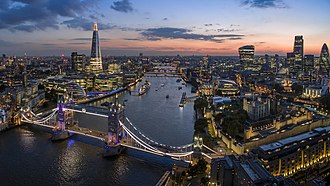
Figure: London location map
# The Ultimate London Guide: Geography, History & Top Attractions
**London map** enthusiasts and travelers alike are drawn to this iconic metropolis, a city where ancient history collides with cutting-edge culture. As the capital of both England and the United Kingdom, London is a global powerhouse with a population of 9.1 million (2024). Its sprawling metropolitan area, the largest in Western Europe, is home to 15.1 million people. Situated on the River Thames in southeast England, London has been a major settlement for nearly two millennia, evolving from a Roman outpost to a vibrant, multicultural capital. This comprehensive **London guide** will explore its geography, uncover its layers of history, and navigate its world-famous sights, providing everything you need for an unforgettable visit.
## Table of Contents
1. [Introduction](#introduction)
2. [Where is London Located?](#where-is-london-located)
3. [London Geography & Landscape](#london-geography–landscape)
4. [Climate and Weather](#climate-and-weather)
5. [History of London](#history-of-london)
6. [Top 10 Tourist Attractions](#top-10-tourist-attractions)
7. [Transportation in London](#transportation-in-london)
8. [Economy and Culture](#economy-and-culture)
9. [Travel Tips for Visiting London](#travel-tips-for-visiting-london)
10. [Conclusion](#conclusion)
11. [Frequently Asked Questions (FAQ)](#frequently-asked-questions-faq)
—
## Where is London Located?
London occupies a strategic position in southeast England, precisely at **51°30′N 0°07′W**. It sits at the head of the River Thames’ 50-mile (80 km) tidal estuary, which opens into the North Sea. The city is the core of the **Greater London** administrative region, which incorporates land historically part of the counties of Middlesex, Essex, Surrey, Kent, and Hertfordshire.
* **Region:** Southeast England
* **Country:** United Kingdom (England)
* **Neighboring Areas:** The Greater London boundary touches counties like Hertfordshire (north), Essex (east), Kent (southeast), Surrey (southwest), and Berkshire (west). Major nearby cities include **Oxford** (west), **Cambridge** (north), and **Brighton** (south).
## London Geography & Landscape
The **London geography** is defined by the River Thames, which meanders through the heart of the city from west to east. The landscape is surprisingly varied for a global megacity.
* **River Thames:** The city’s lifeblood, the Thames is a tidal river that has dictated London’s growth, trade, and defense for centuries. Its banks are lined with iconic landmarks.
* **Terrain & Elevation:** London is not flat. The land generally rises as you move away from the Thames. The highest point is **Hampstead Heath** (134m/440ft), offering panoramic views. The City of London and central areas sit on relatively low-lying, gravelly soil.
* **Water Bodies:** Beyond the Thames, key water features include the **Regent’s Canal**, the **Lee Navigation** (River Lea), and numerous parks with lakes (e.g., **Hyde Park’s Serpentine**, **St. James’s Park lakes**).
* **Green Spaces:** Over 40% of London is green space, including **Royal Parks** (Hyde Park, Kensington Gardens, Richmond Park), **Hampstead Heath**, and **Epping Forest** on the urban fringe.
## Climate and Weather
London experiences a **temperate maritime climate**, characterized by mild winters, cool summers, and rainfall distributed throughout the year.
* **Average Temperatures:**
* **Winter (Dec-Feb):** 2°C – 8°C (36°F – 46°F). Rarely below freezing for long periods.
* **Spring (Mar-May):** 8°C – 15°C (46°F – 59°F). Mild and increasingly pleasant.
* **Summer (Jun-Aug):** 15°C – 23°C (59°F – 73°F). Warm but rarely scorching. Heatwaves can occur.
* **Autumn (Sep-Nov):** 10°C – 18°C (50°F – 64°F). Cooling down with crisp days.
* **Best Time to Visit:** **Late spring (May-June) and early autumn (September)** offer the best balance of pleasant weather, longer daylight hours, and fewer extreme crowds than peak summer.
* **Rainfall:** London gets about 600mm (24 inches) of rain annually, less than many major world cities. It’s often drizzly or showery rather than torrential. Always carry a light jacket or umbrella.
## History of London
London’s **history** is a dramatic tale of destruction and rebirth, spanning nearly 2000 years.
* **Roman Foundation (AD 43):** The Romans founded **Londinium** at the first convenient crossing point of the Thames. It quickly became a major commercial center.
* **Medieval & Tudor Periods:** After the Roman withdrawal, London grew under Anglo-Saxon and Norman rule. The **City of London** and **City of Westminster** (site of royal palaces and Parliament) became distinct centers. The **Great Plague (1665)** and the **Great Fire of London (1666)** devastated the city, leading to its rebuilding by figures like Sir Christopher Wren (St. Paul’s Cathedral).
* **Georgian & Victorian Expansion:** The 18th and 19th centuries saw explosive growth. London became the **world’s largest city** and the heart of the British Empire. The **Industrial Revolution** brought wealth and severe pollution. Key infrastructure like the sewer system (Joseph Bazalgette) and the London Underground (1863) were developed.
* **20th Century to Present:** The city endured the **Blitz** of WWII. Post-war, it weathered economic decline before re-emerging in the late 20th century as a leading global financial and cultural hub. Its name now refers to the vast **Greater London** metropolis.
## Top 10 Tourist Attractions
London’s attractions are world-renowned, drawing millions of visitors annually.
### 1. The British Museum
A treasure trove of global art and artifacts, from the Rosetta Stone to the Elgin Marbles. Entry to its permanent collection is free, making it a must-see for any **[London travel]** itinerary.
### 2. The Tower of London & Crown Jewels
This historic castle on the Thames has been a royal palace, prison, and armory. The dazzling **Crown Jewels** are housed here, guarded by the iconic Beefeaters.
### 3. Buckingham Palace
The official London residence of the monarch. Witness the **Changing of the Guard** ceremony outside its gates—a quintessential **[London tourism]** experience.
### 4. The Houses of Parliament & Big Ben
The iconic Gothic Revival complex is home to the UK Parliament. The clock tower, **Elizabeth Tower** (commonly called Big Ben), is a symbol of London and the UK.
### 5. The London Eye
This giant Ferris wheel on the South Bank provides breathtaking 360-degree views of the **London skyline**, from the Shard to Windsor on a clear day.
### 6. St. Paul’s Cathedral
Sir Christopher Wren’s masterpiece, with its magnificent dome. Climb to the top for stunning views and see the Whispering Gallery. It hosted the royal wedding of Prince Charles and Lady Diana.
### 7. Tate Modern
Housed in a former power station, this is one of the world’s leading museums of modern and contemporary art. Its viewing floor offers great views across the Thames.
### 8. Natural History Museum
A stunning Alfred Waterhouse building housing 80 million specimens. The dinosaur skeletons, especially the animatronic T-Rex, are a huge hit with families.
### 9. The West End Theatre District
London’s equivalent of Broadway. Catch a world-class musical or play in one of the historic theaters around **Leicester Square** and **Covent Garden**.
### 10. Hyde Park & Kensington Gardens
The largest of the Royal Parks. Enjoy boating on the Serpentine, visiting the **Albert Memorial**, or exploring **Kensington Palace**. A vital green lung in the city center.
## Transportation in London
Navigating this vast city is straightforward thanks to its integrated public transport system.
* **How to Get There:** London has major international gateways:
* **Heathrow (LHR):** Main international airport, west of the city.
* **Gatwick (LGW):** South of London, major hub.
* **St Pancras International:** Eurostar terminal for high-speed trains from Paris, Brussels, etc.
* **Major Rail Stations:** King’s Cross, Victoria, Liverpool Street, Paddington connect London to the UK.
* **Getting Around:**
* **The Tube (Underground):** The fastest way to travel long distances. 11 lines, color-coded. Operates ~5am-midnight.
* **Buses:** Extensive network, slower but great for sightseeing. Use the famous red double-deckers.
* **Trains:** Overground and TfL Rail connect suburbs.
* **Taxis & Ride-Hailing:** Black Cabs (metered, can be hailed) and apps like Uber.
* **Walking:** Many central attractions are within walking distance.
* **Key Tip:** Get an **Oyster Card** or use a contactless bank card/phone for the best, capped fares on all public transport. Avoid paper tickets.
## Economy and Culture
London is a global capital for finance, arts, and cuisine.
* **Economy:** Dominated by **financial services** (the “City” is a rival to Wall Street), followed by professional services, tech, media, and creative industries. Tourism is a massive economic driver.
* **Cultural Highlights:**
* **Theatre:** West End and Shakespeare’s Globe.
* **Museums & Galleries:** British Museum, Tate galleries, V&A, Natural History Museum (many free).
* **Music:** From classical at the Royal Albert Hall to indie in Camden.
* **Multiculturalism:** Over 300 languages spoken. Explore neighborhoods like **Brick Lane (Banglatown)**, **Chinatown**, **Southall (Little India)**.
* **Local Cuisine:** Move beyond fish and chips! Try:
* A traditional **Sunday roast** with Yorkshire puddings.
* **Full English breakfast**.
* **Afternoon tea** with scones and clotted cream.
* International fare reflecting its diversity, from curry on Brick Lane to Vietnamese in Shoreditch.
## Travel Tips for Visiting London
* **Best Neighborhoods to Stay:**
* **Covent Garden/Soho:** Central, vibrant, dining & theatre.
* **South Bank:** Walking distance to major sights, Thames views.
* **Camden/Kings Cross:** Trendy, good transport links, youthful.
* **Mayfair/St James’s:** Upscale, near parks and luxury shopping.
* **Paddington:** Good for Heathrow Express access.
* **Safety:** London is generally very safe. Standard precautions apply: be mindful of pickpockets in crowded tourist spots and on public transport, especially the Tube. Keep valuables secure.
* **Budget Information:**
* **Expensive:** Accommodation, West End shows, fine dining.
* **Moderate:** Attractions (many major museums are free!), mid-range restaurants, Tube fares.
* **Save Money:** Use free museums, walk, eat at pubs or street food markets, consider a **London Pass** for bundled attraction entry if visiting many paid sites. Stay in zones 3-4 for cheaper hotels.
## Conclusion
From its Roman foundations on the banks of the Thames to its status as a 21st-century global capital, London is a city of unparalleled depth and energy. Its **geography**—a river-defined metropolis with sprawling green lungs—supports a culture that is fiercely traditional yet relentlessly innovative. Whether you’re tracing history at the Tower of London, marveling at art in the Tate Modern, or simply enjoying a pint in a historic pub, this **London guide** equips you to explore its many facets. The city’s layers are waiting to be discovered. Start planning your journey with a **London map** and immerse yourself in one of the world’s greatest cities.
—
## Frequently Asked Questions (FAQ)
**Q1: What is the best way to get around London as a tourist?**
**A:** The Oyster Card or contactless payment on the Tube and buses is most efficient. Combine this with walking in central zones. For first-time visitors, a hop-on-hop-off bus tour can provide a good overview.
**Q2: How many days should I spend in London?**
**A:** To see the major highlights comfortably, plan for **at least 4-5 full days**. A week allows for deeper exploration, day trips (e.g., Oxford, Windsor, Stonehenge), and a more relaxed pace.
**Q3: Is London expensive to visit?**
**A:** Yes, it is one of Europe’s more expensive capitals. However, costs can be managed by utilizing free museums and parks, eating at pubs and markets, using public transport, and booking accommodation in advance.
**Q4: What should I pack for London weather?**
**A:** Pack layers and a waterproof jacket or umbrella regardless of the season. Comfortable walking shoes are non-negotiable. A light sweater for cool evenings in summer is wise.
**Q5: Do I need to book attractions in advance?**
**A:** **Yes, for many.** Major paid attractions like the London Eye, Tower of London, and popular West End shows often have timed entry slots and can sell out, especially in peak season (summer, holidays). Always check official websites and book ahead.
—
**Meta Description:** Explore our comprehensive London guide. Discover London geography, history, top attractions, transport tips, and essential travel advice for your visit. Plan your perfect trip today.
—
### **Suggested Image Alt Texts:**
1. `Aerial panoramic view of the London skyline with the River Thames and Tower Bridge`
2. `Tourist looking at a London map on a street corner near Big Ben and the Houses of Parliament`
3. `The grand entrance and facade of the British Museum in Bloomsbury, London`
4. `Changing of the Guard ceremony outside Buckingham Palace with red telephone box`
5. `Interior of St. Paul’s Cathedral looking up at the famous dome`
6. `A classic red London double-decker bus on a rainy street in Covent Garden`
7. `Sunset over the Thames with the London Eye and modern skyscrapers in the background`
London Maps Gallery – 9 High-Resolution Views
Explore London from every angle with our collection of detailed maps.
Each map is optimized for clarity and includes essential geographic information.


