
Nestled on the edge of the Arctic, Norway is a land of dramatic contrasts, where jagged peaks meet glacial fjords and midnight sun illuminates snow-capped landscapes. Home to the world’s longest fjord—the 204-km Sognefjord—and Europe’s highest peak, Galdhøpiggen (2,469 m), Norway’s geography is as awe-inspiring as it is diverse. From its jagged coastline dotted with islands to its vast Arctic wilderness, Norway’s map reveals a nation shaped by ice, water, and millennia of geologic forces. This Nordic gem, often called the “Land of the Midnight Sun,” invites exploration through its winding fjords, rugged mountains, and vibrant coastal cities.
Table of Contents
Map Gallery
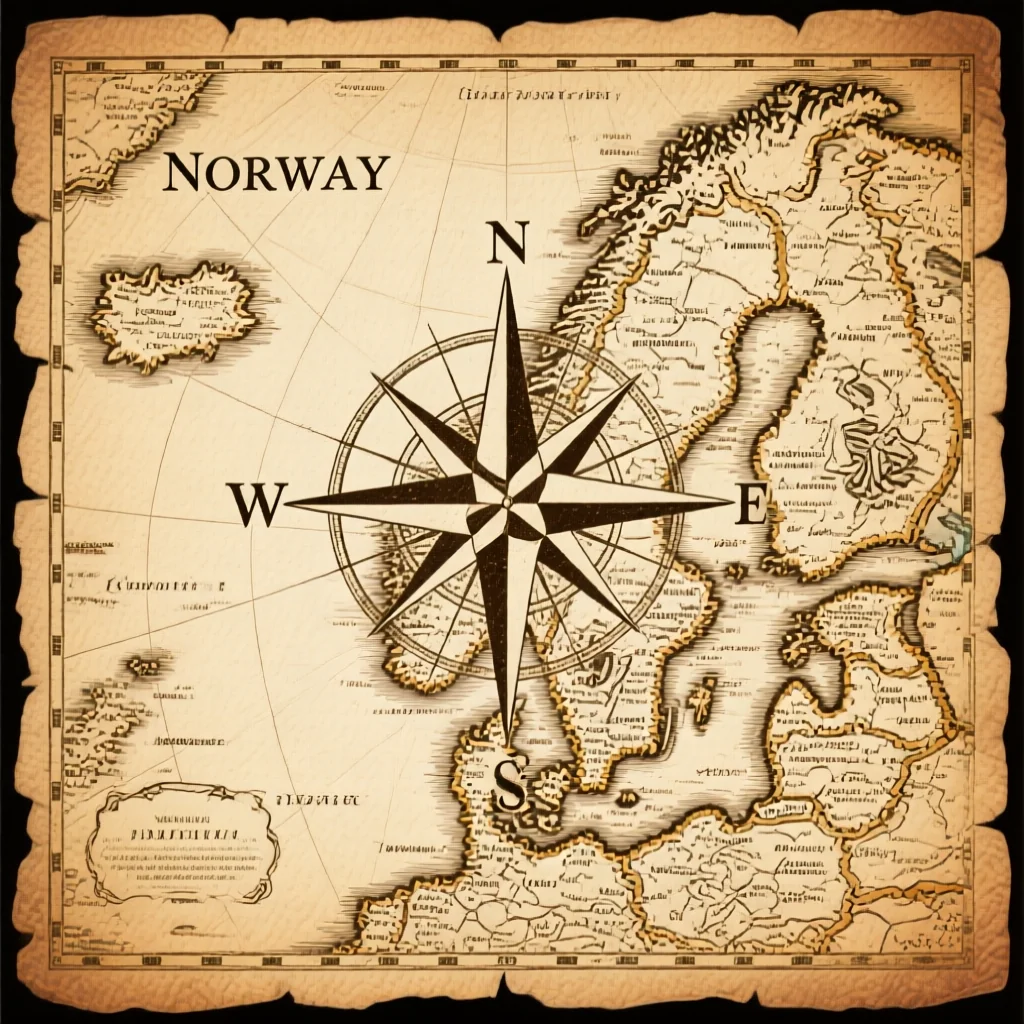
Geographic Overview
Geographic Location
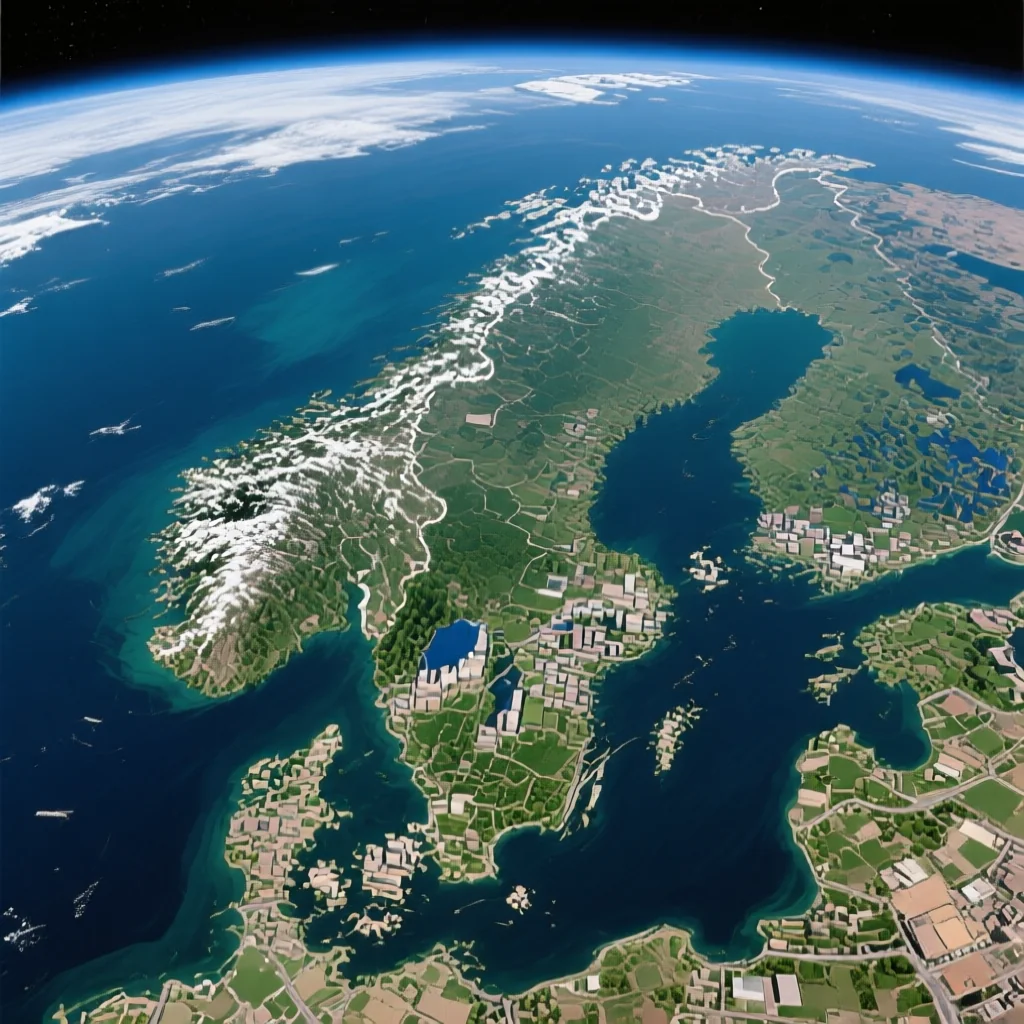
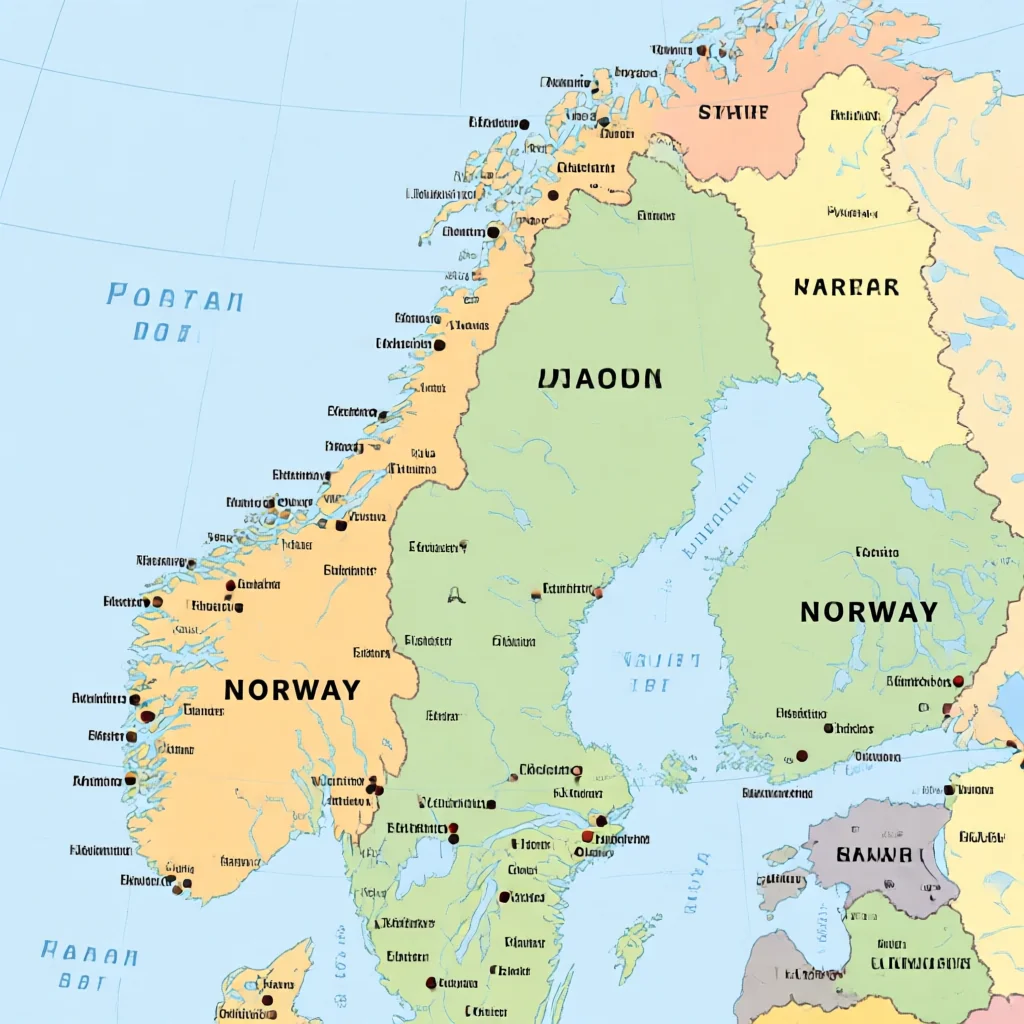
Norway, located in Northern Europe, is part of the Scandinavian Peninsula and bordered by Sweden to the east, Finland and Russia to the northeast, and the North and Norwegian Seas to the west and north. Its strategic position on the North Atlantic makes it a maritime crossroads, with over 1,000 islands and a coastline stretching 25,000 km when fjords are counted. Covering 385,207 km², it’s slightly smaller than Montana but twice as populous. The northernmost point, North Cape (Nordkapp), lies just 2,000 km from the North Pole, while the southernmost tip dips into temperate zones. Norway’s map spans polar, subarctic, and temperate climates, creating a unique geographic mosaic.
Topography and Terrain
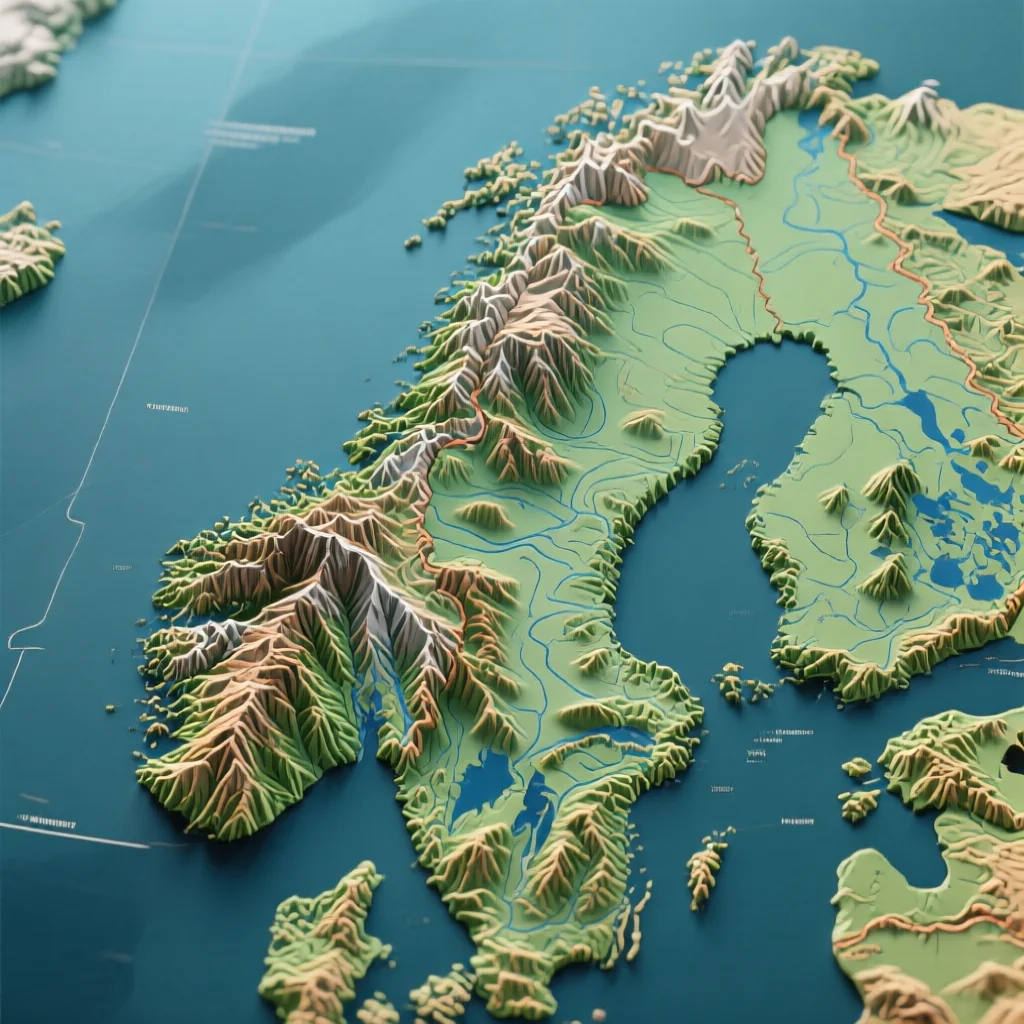
Norway is a topographer’s dream, with mountains, fjords, and glaciers dominating its landscape. The Scandinavian Mountains run northeast-southwest, forming Europe’s largest mountain range. Jotunheimen National Park hosts Galdhøpiggen, Norway’s highest peak. The famous Trolltunga (“Troll’s Tongue”) and Preikestolen (“Pulpit Rock”) are iconic cliff formations carved by ancient glaciers. Over 10% of Norway is covered by glaciers, including Jostedalsbreen—the largest in continental Europe. The 604-km Glomma River, Norway’s longest, flows through valleys to the North Sea. The Norwegian Atlas highlights its 450 fjords, which formed when glacial valleys flooded, creating deep, narrow inlets. With only 3% arable land, Norway’s rugged terrain is a testament to its glacial history.
Climate and Weather
Norway’s climate varies dramatically due to its latitude and topography. The Gulf Stream tempers the coast, giving cities like Bergen a mild oceanic climate (average winter 0°C, summer 15°C). Inland and northward, temperatures plummet; Tromsø, above the Arctic Circle, experiences polar nights and midnight sun, with winters often below -10°C. The western coast, sheltered by mountains, is wetter (annual rainfall 2,500 mm in some areas), while eastern regions are drier. Northern Norway’s subarctic climate supports tundra, while southern areas feature boreal forests. The Norwegian topographic map also reveals microclimates, like the rain shadow valleys of Vest-Agder, which are warmer and drier.
Major Cities and Regions
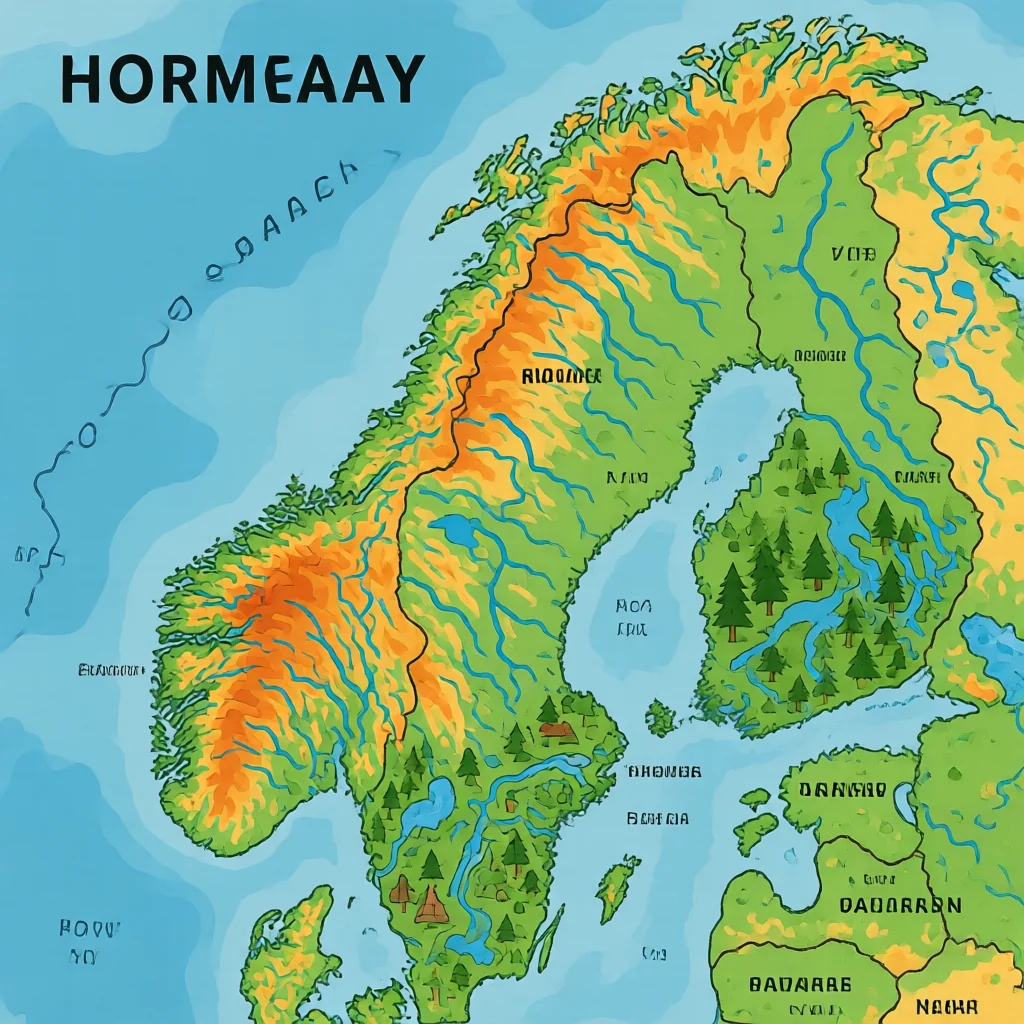
Norway’s cities and regions reflect its geographic diversity. Oslo, the capital, lies in the southeast, surrounded by forests and lakes. Bergen, the “Gateway to the Fjords,” anchors Western Norway, where UNESCO-listed Bryggen Wharf and the Seven Mountains backdrop its harbor. Trondheim, in Trøndelag, is a cultural hub with medieval architecture. Stavanger, in Rogaland, is a petroleum industry center near Lysefjord. Northern Norway’s Tromsø is a gateway to the Arctic, while Svalbard’s Longyearbyen is a remote polar research outpost. The country is divided into 19 counties, each with distinct landscapes—from the flatlands of Hedmark to the dramatic fjords of Hordaland.
Natural Landmarks
Norway’s natural landmarks are global marvels. The Sognefjord’s emerald waters and steep cliffs attract millions, while the Geirangerfjord is a UNESCO site. The Northern Lights dance above Tromsø and Finnmark, and the Lofoten Islands’ dramatic peaks rise abruptly from the sea. Jotunheimen’s peaks challenge mountaineers, and the Jostedalsbreen glacier covers 487 km². The Arctic archipelago of Svalbard hosts polar bears and the Global Seed Vault. These sites, mapped in detail on Norway’s topographic maps, underscore its role as a natural wonderland, blending adventure and serenity. Norway’s geography, captured in maps and guides like the Norway atlas, reveals a nation where every corner—from the Arctic tundra to the sunlit fjords—offers a unique story of Earth’s beauty and power. Whether exploring its peaks, coasts, or hidden valleys, Norway’s landscapes inspire awe, making it a destination like no other.
Conclusion
Norway offers a diverse geographical landscape worth exploring. From its natural wonders to urban centers, there is much to discover.