
Nestled in the heart of Europe, Switzerland is a land of stark natural contrasts—snow-capped Alps, pristine lakes, and charming medieval villages. Despite being landlocked, it boasts over 1,500 lakes, including Lake Geneva, one of Europe’s largest. This tiny country, famous for precision engineering and political neutrality, spans just 41,285 square kilometers yet holds 48 of Europe’s highest peaks above 4,000 meters. From the Matterhorn’s iconic pyramid to the serene Swiss Plateau, its geography is as diverse as its four official languages. Let’s journey through Switzerland’s geography, where every map reveals a world of wonder.
Table of Contents
Map Gallery
Geographic Overview
2. Geographic Location
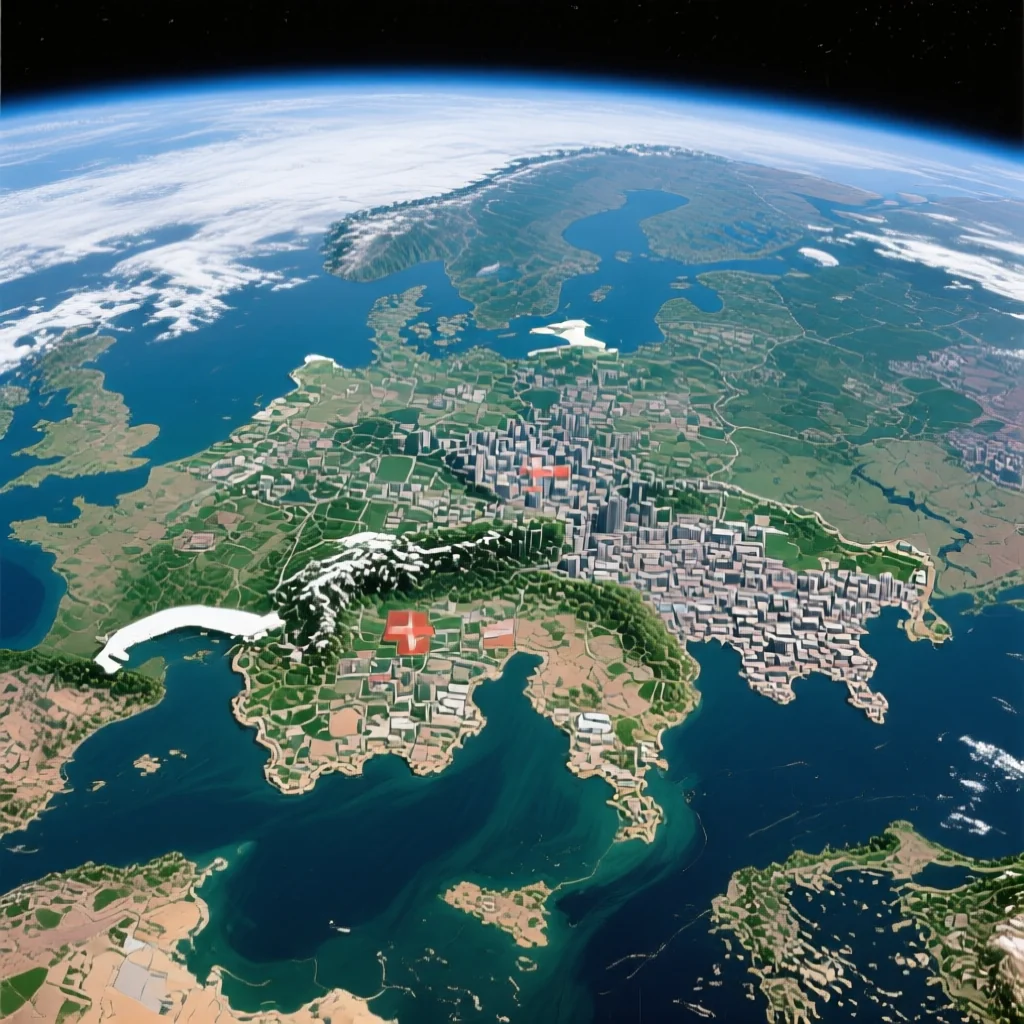
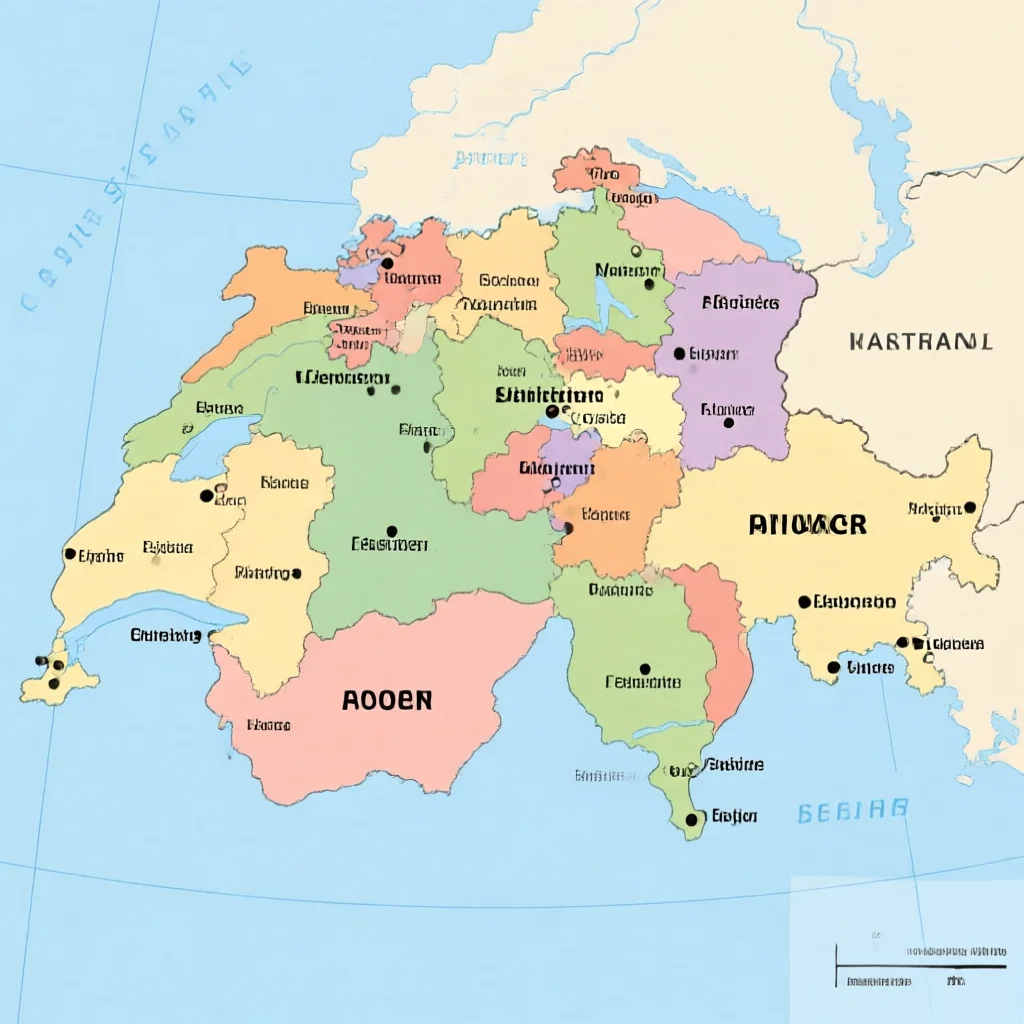
Switzerland is located in Western Europe, bordered by Germany to the north, France to the west, Italy to the south, and Austria and Liechtenstein to the east. Its strategic position at the crossroads of major European cultures has shaped its multilingual identity. With a total area of 41,285 square kilometers—slightly smaller than the U.S. state of Maryland—its borders are defined by natural features like the Rhine River and the Alps. A Switzerland map reveals a compact yet geographically complex nation, best explored through detailed Switzerland atlas resources.
3. Topography and Terrain
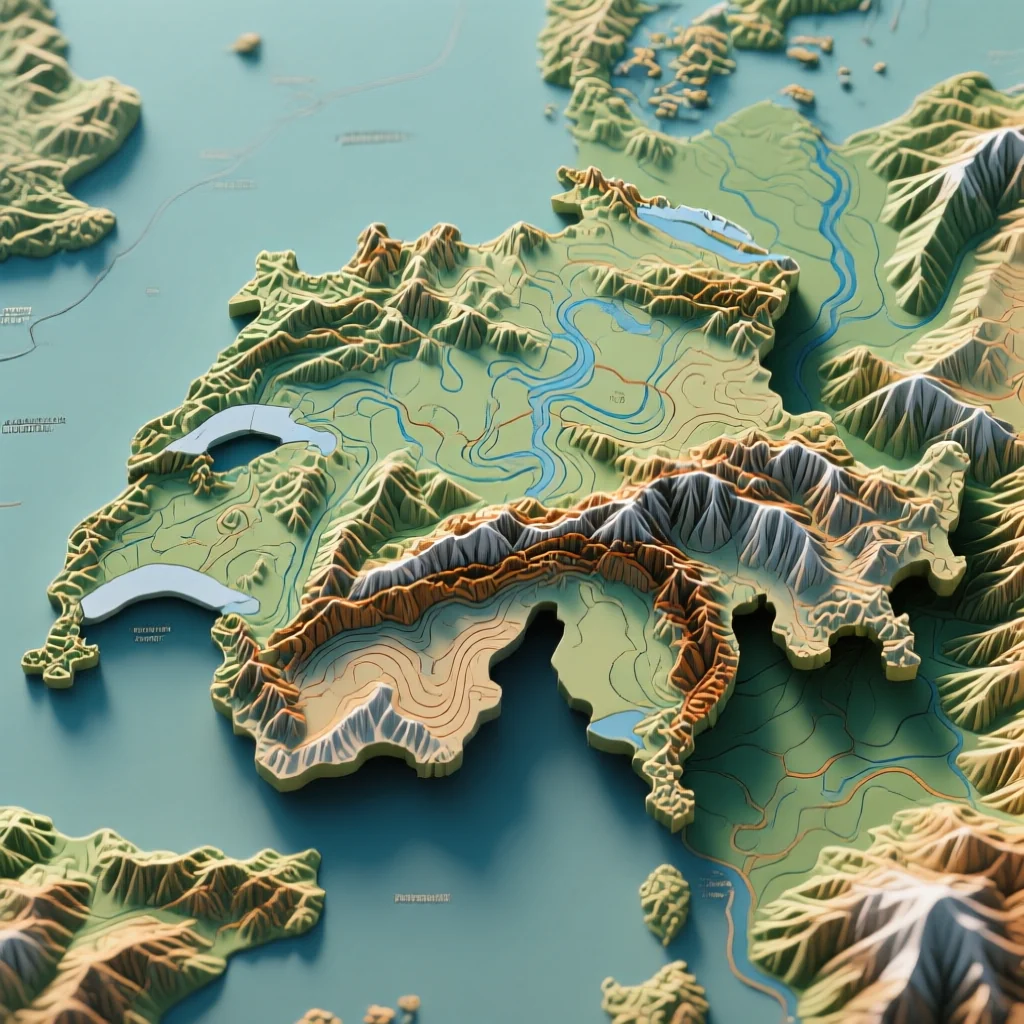
Switzerland’s topography is dominated by the Swiss Alps, which cover 64% of the country. Peaks like the Matterhorn (4,478 meters) and the Eiger’s north face are legendary landmarks. The Jura Mountains extend along the northwest border, while the Swiss Plateau—a fertile valley between the Alps and Jura—hosts 3.5 million people and major cities like Zurich and Bern. Rivers like the Rhine, Rhône, and Ticino carve through valleys, linking to major lakes such as Lake Constance and Lake Maggiore. The country’s highest point, Monte Rosa (4,634 meters), contrasts with its lowest elevation at Lake Maggiore (193 meters). A Switzerland topographic map captures this dramatic elevation shift, from vineyards in the Rhône Valley to glaciers in the Alps.
4. Climate and Weather
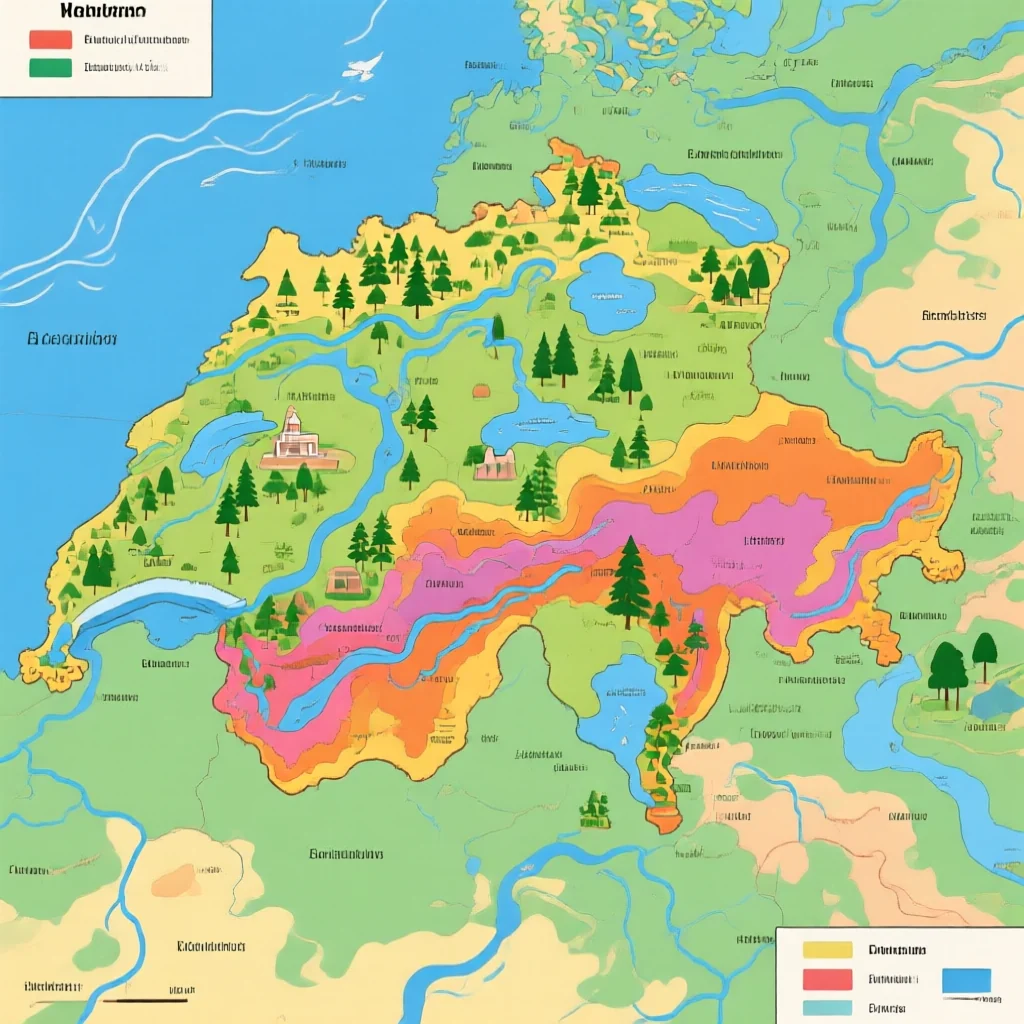
Switzerland’s climate varies with altitude and terrain. The Swiss Plateau enjoys a temperate climate with mild winters and warm summers, while the Alps experience alpine conditions—cold, snowy winters and cool summers. The southern Ticino region has a Mediterranean climate, with palm trees near Lake Lugano. Temperature differences between valleys and peaks can exceed 20°C. The Föhn, a warm wind descending from the Alps, can rapidly raise temperatures, even melting snow in winter. Annual precipitation ranges from 1,000 mm in the Plateau to over 3,000 mm in mountainous regions, sustaining lush forests and glacial ecosystems.
5. Major Cities and Regions
Switzerland’s major cities reflect its linguistic and cultural diversity. German-speaking Zurich, the economic hub, and Basel, near the Rhine, contrast with French-speaking Geneva, home to international organizations like the UN. The capital, Bern, lies centrally in the Plateau. Italian-speaking Lugano in Ticino offers lakeside elegance, while Romansh-speaking regions like Engadin in Graubünden offer alpine tranquility. Regional divisions emphasize cultural identities more than political boundaries, with the Plateau, Alps, and Jura each shaping lifestyles and economies. A Switzerland map highlights these regions, revealing how geography fosters unity in diversity.
6. Natural Landmarks
Switzerland’s natural wonders draw millions. The Matterhorn’s pyramid shape is a symbol of the Alps, while the Jungfrau-Aletsch region’s 23-kilometer Aletsch Glacier, Europe’s largest, is a UNESCO site. The Rhine Falls near Schaffhausen, spanning over 150 meters, is Europe’s biggest waterfall. Lake Geneva mirrors Mont Blanc, while the Engadin Valley’s crystal-clear lakes and peaks inspire hikers. The Swiss National Park in Graubünden safeguards untamed alpine ecosystems. These landmarks, best explored using detailed Switzerland maps, showcase the nation’s geological heritage and outdoor allure. From its rugged peaks to its tranquil lakes, Switzerland’s geography is a tapestry of natural beauty and cultural richness. Whether tracing its borders on a Switzerland map or hiking the Alps, this landlocked nation continues to captivate with its timeless splendor.
Conclusion
Switzerland offers a diverse geographical landscape worth exploring. From its natural wonders to urban centers, there is much to discover.