Cameroon – Interactive Country Maps and Geography Guide
April 4, 2026 · admin
Section 1
Explore the diverse Cameroon map, from its physical geography to political boundaries, and discover the rich terrain, topography, and urban landscape of this African gem.
🗺️ Physical Geography Map of Cameroon
Section 2
INTRODUCTION
Cameroon, often referred to as "Africa in miniature," is a country that offers a microcosm of the continent's varied landscapes and cultures. From the lush rainforests in the south to the arid savannas in the north, Cameroon's geography is as fascinating as it is diverse. In this comprehensive guide, you will delve into the intricacies of Cameroon's terrain, topography, and political boundaries through various types of maps. Whether you're a geography enthusiast, a traveler, or simply curious about this dynamic nation, this article will provide you with a detailed understanding of Cameroon's geographical features and administrative structure.
🗺️ Satellite View of Cameroon from Space
Section 3
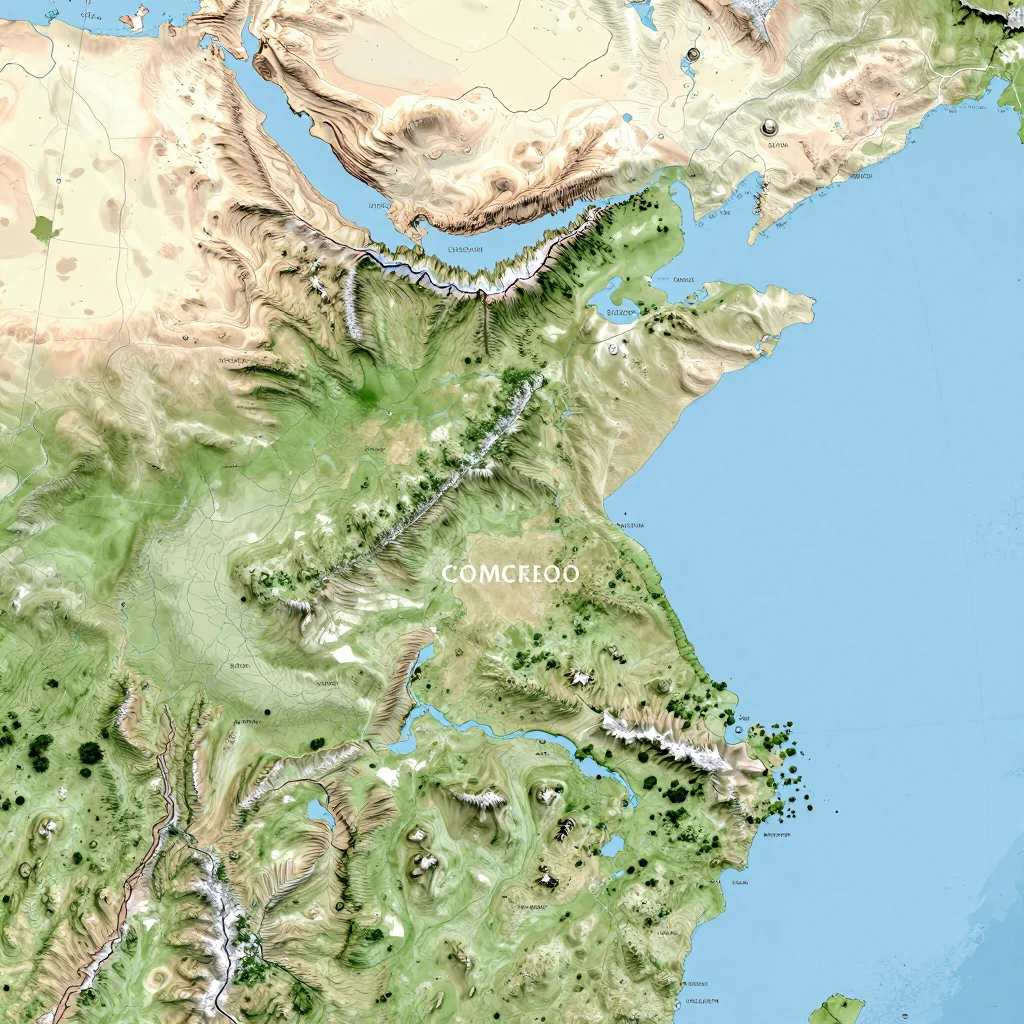
Physical Geography Map of Cameroon
Cameroon's physical geography is a testament to its nickname "Africa in miniature." This diverse country is home to a wide range of terrain and topography, including volcanic mountains, dense rainforests, and expansive savannas. The physical map of Cameroon reveals the intricate details of its natural landscape, highlighting the country's most prominent physical features. One of the most striking elements of Cameroon's terrain is the Mount Cameroon, which stands at 4,095 meters (13,435 feet) and is the highest point in West and Central Africa. This active volcano, located in the Southwest Region, is a significant landmark and a popular destination for hikers and nature enthusiasts. The physical map also showcases the Adamawa Plateau, a highland area that stretches across the central part of the country, providing a natural boundary and influence on the climate. Rivers play a crucial role in Cameroon's geography. The Sanaga River, the longest in the country, flows through the central region and empties into the Gulf of Guinea. Other important rivers include the Nyong, Dja, and Logone, which are vital for agriculture and transportation. The map also highlights several lakes, such as Lake Ossa and Lake Barombi Mbo, which are important for local ecosystems and fishing communities. The physical map of Cameroon is a valuable tool for understanding the country's natural resources and environmental challenges. It provides insights into the diverse ecosystems, from the mangroves along the coast to the highlands in the north, making it an essential resource for geographers, environmental scientists, and policymakers.
🗺️ Topographic Relief Map of Cameroon
Section 4
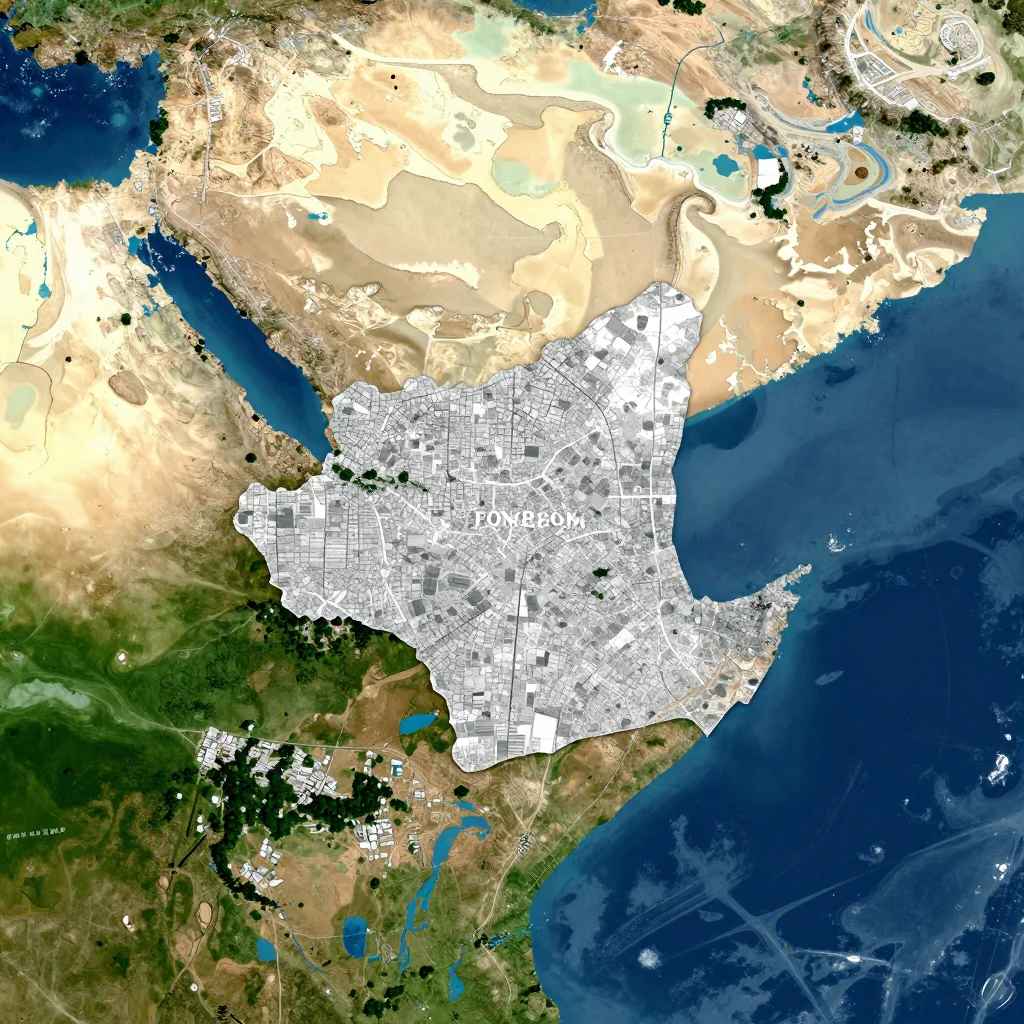
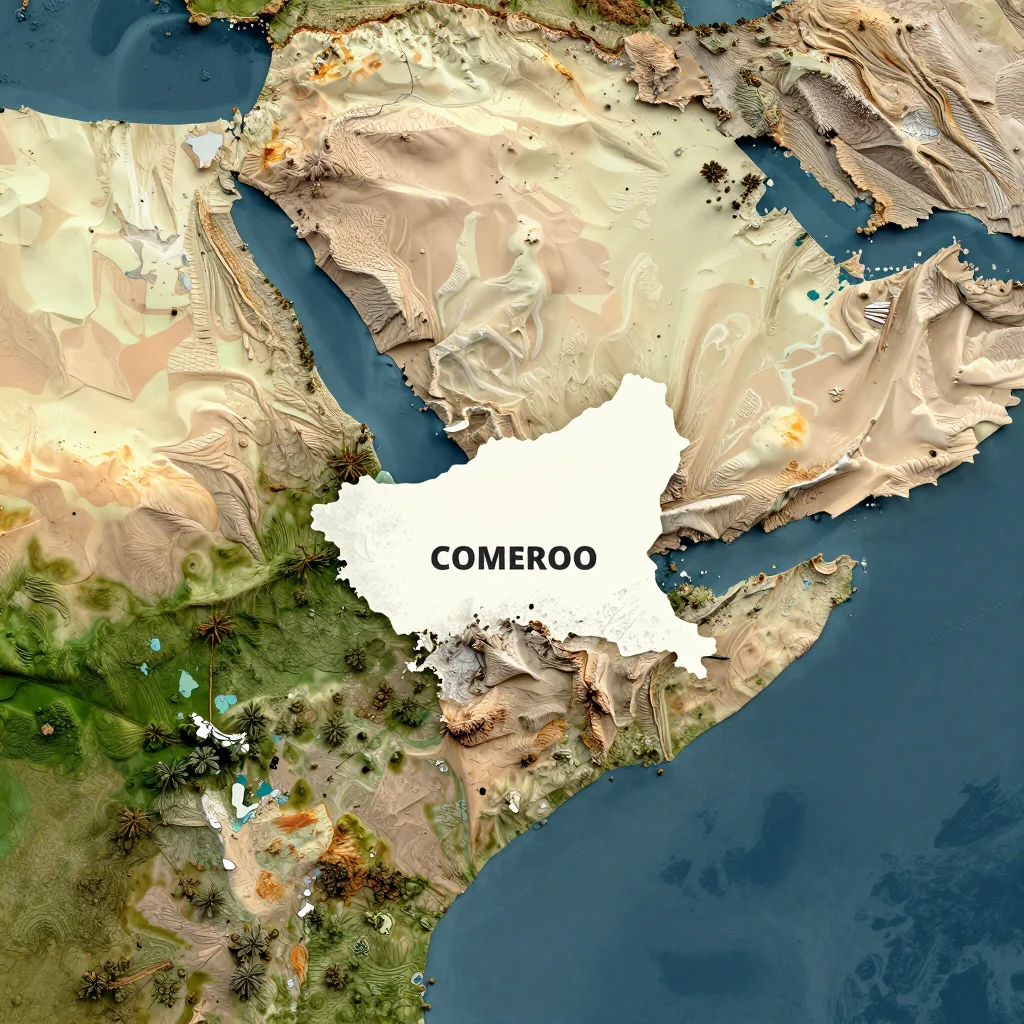
Satellite View of Cameroon from Space
Satellite imagery of Cameroon offers a breathtaking perspective of the country's vast and varied land cover. From the clear blue waters of the Gulf of Guinea to the dense green forests of the south, the satellite view of Cameroon captures the essence of its natural beauty and complexity. The satellite imagery reveals the stark contrast between urban and rural areas. Major cities like Yaoundé, the capital city, and Douala, the economic hub, are easily identifiable by their dense clusters of buildings and infrastructure. In contrast, the rural areas are characterized by expansive fields, forests, and smaller villages. The satellite view also highlights the country's extensive river systems, which are crucial for its agriculture and water resources. In the north, the satellite imagery shows the transition from the lush forests to the arid savannas, which are home to nomadic tribes and wildlife. The aerial view of Cameroon's terrain provides a comprehensive understanding of the country's land use and environmental conditions, making it an invaluable resource for urban planners, environmentalists, and researchers.
🗺️ Political Map of Cameroon – Administrative Boundaries
Section 5
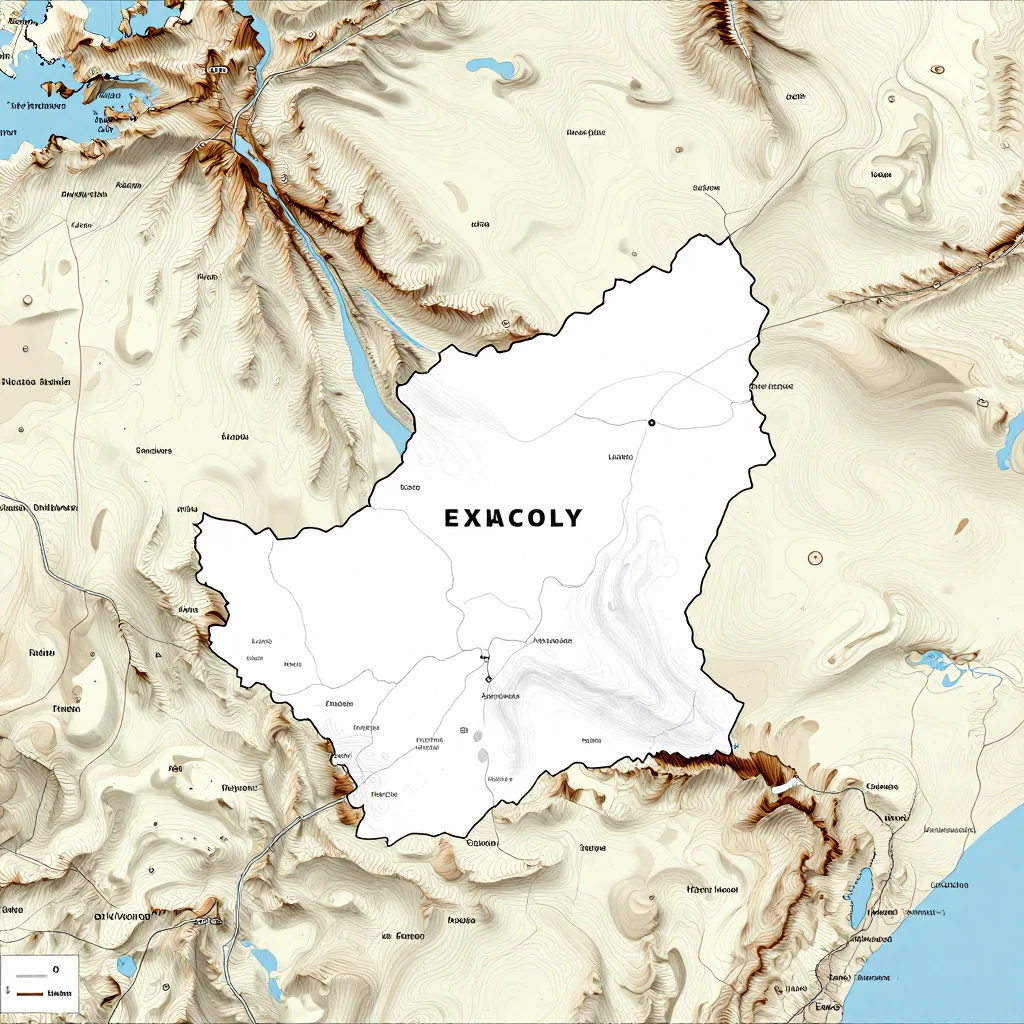
Topographic Relief Map of Cameroon
A topographic relief map of Cameroon is a detailed representation of the country's elevation data, mountain ranges, and terrain variations. This type of map is essential for understanding the physical landscape and the challenges it presents. The topographic map of Cameroon shows the significant elevation changes across the country. The Adamawa Plateau, with its average elevation of 1,000 meters (3,300 feet), is a prominent feature. The plateau is dissected by numerous rivers, creating a rugged and diverse terrain. The map also highlights the volcanic mountains, such as Mount Cameroon and the Oku Volcanic Field, which are characterized by steep slopes and fertile volcanic soil. Contour lines on the map provide a clear indication of the relief, making it easy to identify areas of high and low elevation. The coastal region, with its flat terrain and mangrove swamps, is sharply contrasted with the mountainous regions in the north and west. The topographic map is a crucial tool for hikers, geologists, and anyone interested in the physical geography of Cameroon.
🗺️ Street Map of Cameroon – Road Network
Section 6
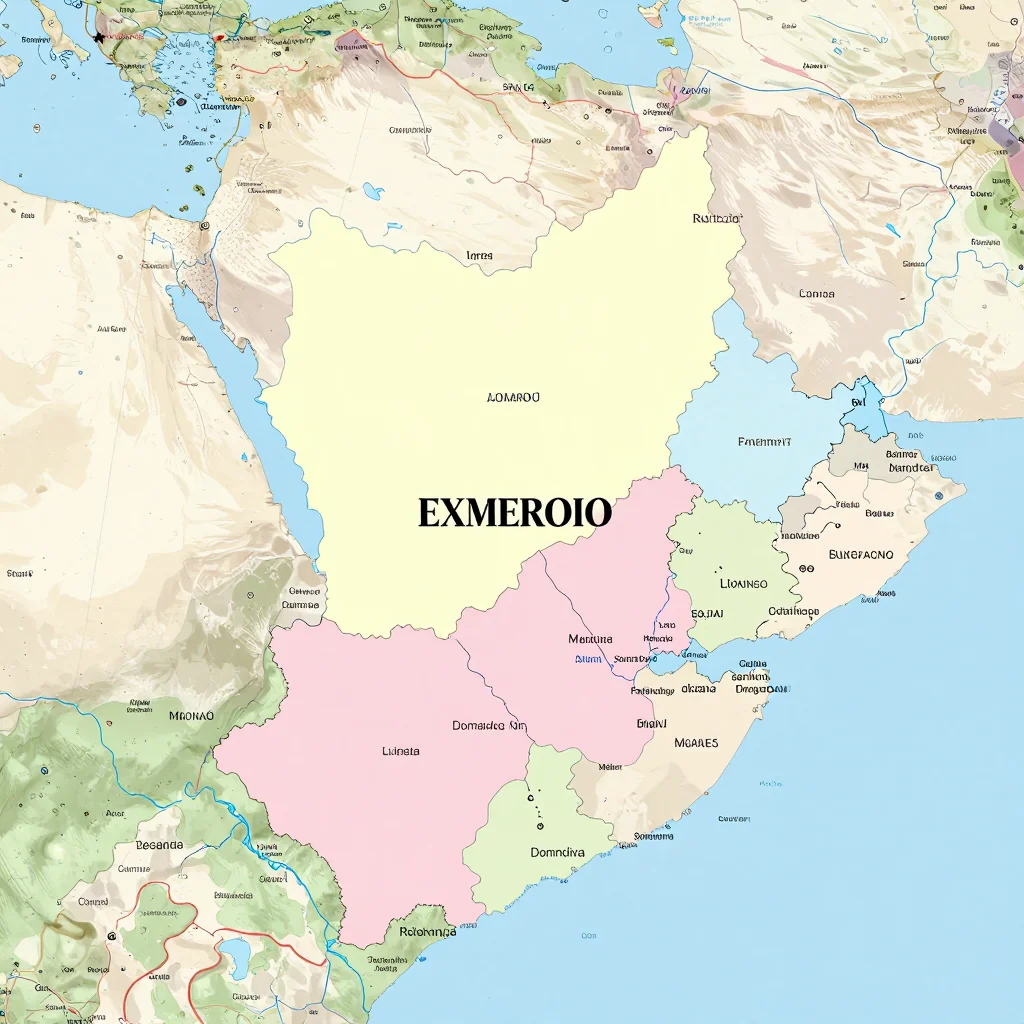
Political Map of Cameroon – Administrative Boundaries
The political map of Cameroon is a comprehensive guide to the country's administrative divisions and borders. It provides a clear overview of the 10 regions and their respective capitals, as well as the international boundaries that define Cameroon's location. Cameroon shares borders with six countries: Nigeria to the northwest, Chad to the northeast, the Central African Republic to the east, Equatorial Guinea, Gabon, and the Republic of the Congo to the south. The political map clearly delineates these borders, which are often marked by natural features like rivers and mountains. The capital city, Yaoundé, is located in the Center Region and is the seat of government. Douala, the largest city and economic center, is situated in the Littoral Region. The political map also shows other important cities such as Bafoussam, Garoua, and Limbe, each with its unique cultural and economic significance. By examining the political map, one can gain insights into the governance structure of Cameroon. The map illustrates how the country is divided into regions, each with its own administrative boundaries and local government. This information is vital for understanding the political and social dynamics of the country.
🗺️ Historical Vintage Map of Cameroon – Antique Cartography
Section 7
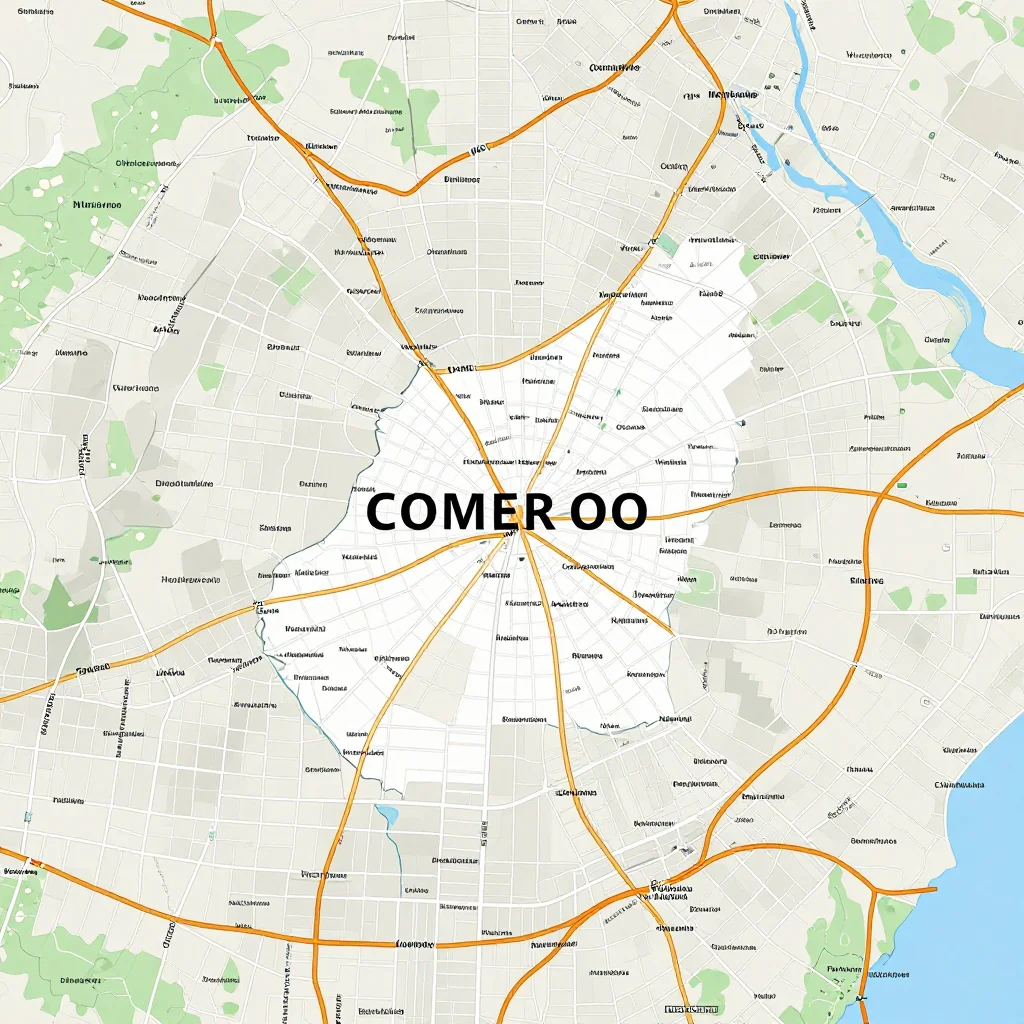
Street Map of Cameroon – Road Network
The street map of Cameroon is a detailed guide to the country's road infrastructure and urban layout. It provides a clear view of the major highways, secondary roads, and local streets that connect the various cities and towns. Cameroon's road network is extensive, with the main highway, the N1, running from Douala in the west to Garoua in the north. This highway is a crucial artery for transportation and commerce. The street map also shows the intricate network of secondary roads that serve rural areas, facilitating access to remote communities and agricultural regions. Urban planning in Cameroon is evident in the layout of cities like Yaoundé and Douala. These cities have well-organized street grids, with major thoroughfares and smaller residential streets. The map also highlights important landmarks such as government buildings, hospitals, and educational institutions, making it a valuable resource for both residents and visitors. The street map of Cameroon is essential for anyone planning to travel within the country. It provides detailed information on the road network, helping travelers navigate efficiently and understand the connectivity between different parts of the country.
🗺️ 3D Isometric Topographic Map of Cameroon
Section 8
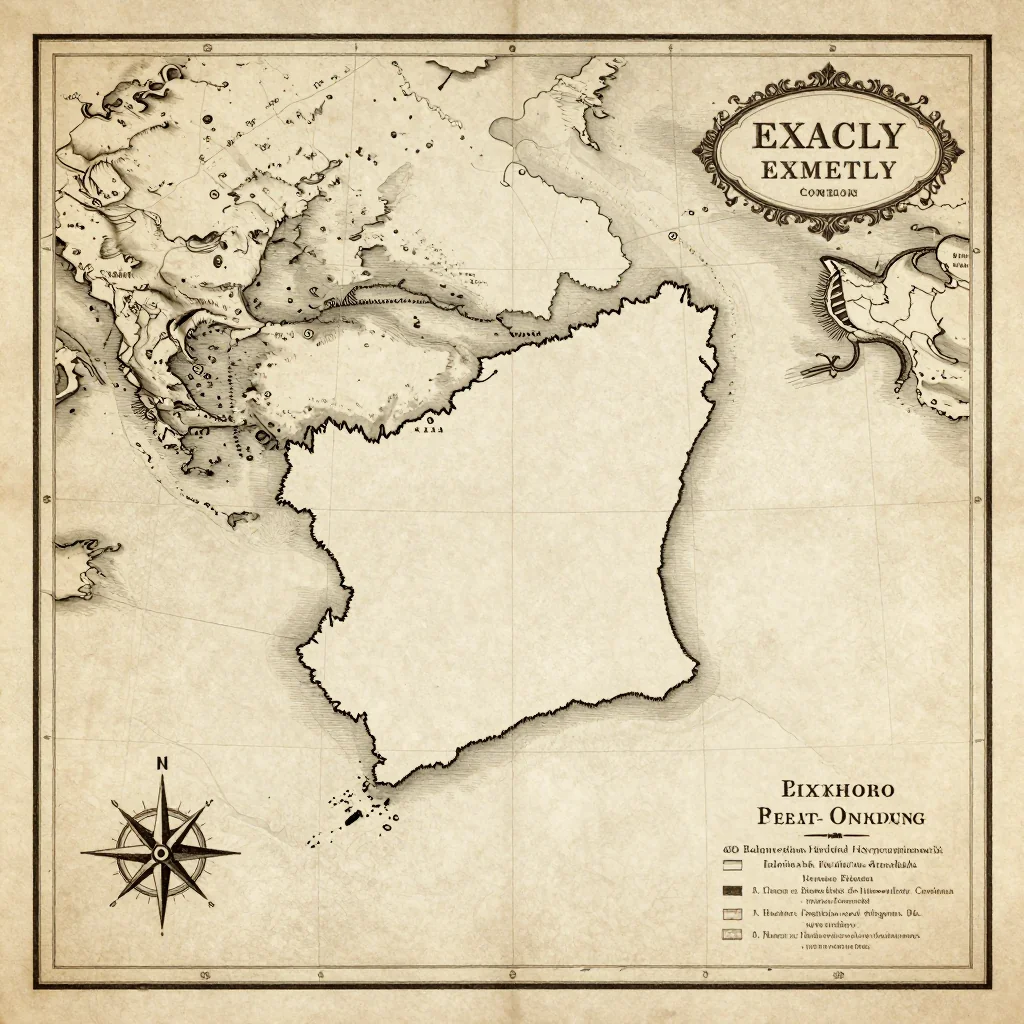
Historical Vintage Map of Cameroon
Historical vintage maps of Cameroon offer a glimpse into the past, showcasing the evolution of cartography and the country's historical significance. These antique maps, often created during the colonial era, are a blend of art and science, reflecting the cartographic techniques of the time. The historical map of Cameroon typically includes detailed illustrations of the coastline, major rivers, and mountain ranges. It also marks important cities and towns, such as Yaoundé and Douala, which were significant during the colonial period. These maps often feature annotations and notes that provide context about the region's history, such as trade routes and early settlements. Vintage maps are not only valuable for their historical accuracy but also for their aesthetic appeal. They are a testament to the skill and creativity of early cartographers and offer a unique perspective on how Cameroon was mapped and understood in the past. For history buffs and cartography enthusiasts, these maps are a treasure trove of information.
🗺️ Futuristic Cyberpunk Map of Cameroon
Section 9
3D Isometric Topographic Map of Cameroon
A 3D isometric topographic map of Cameroon brings the country's physical features to life, providing a more immersive and detailed visualization of its terrain. This type of map uses a three-dimensional perspective to highlight elevation changes, making it easier to understand the landscape. The 3D visualization of Cameroon's topography reveals the dramatic contrast between the coastal plains and the mountainous regions. The Adamawa Plateau and the volcanic mountains, such as Mount Cameroon, stand out prominently, showing the rugged and varied terrain. The isometric view also provides a clearer understanding of the river systems, which are essential for the country's water resources and agricultural activities. 3D maps are particularly useful for hikers, mountaineers, and geographers who need a more detailed and realistic representation of the terrain. They offer a more engaging and interactive way to explore Cameroon's geography, making it easier to plan routes and understand the physical environment.
🗺️ Isometric Tourist Map of Cameroon – Flat Design